
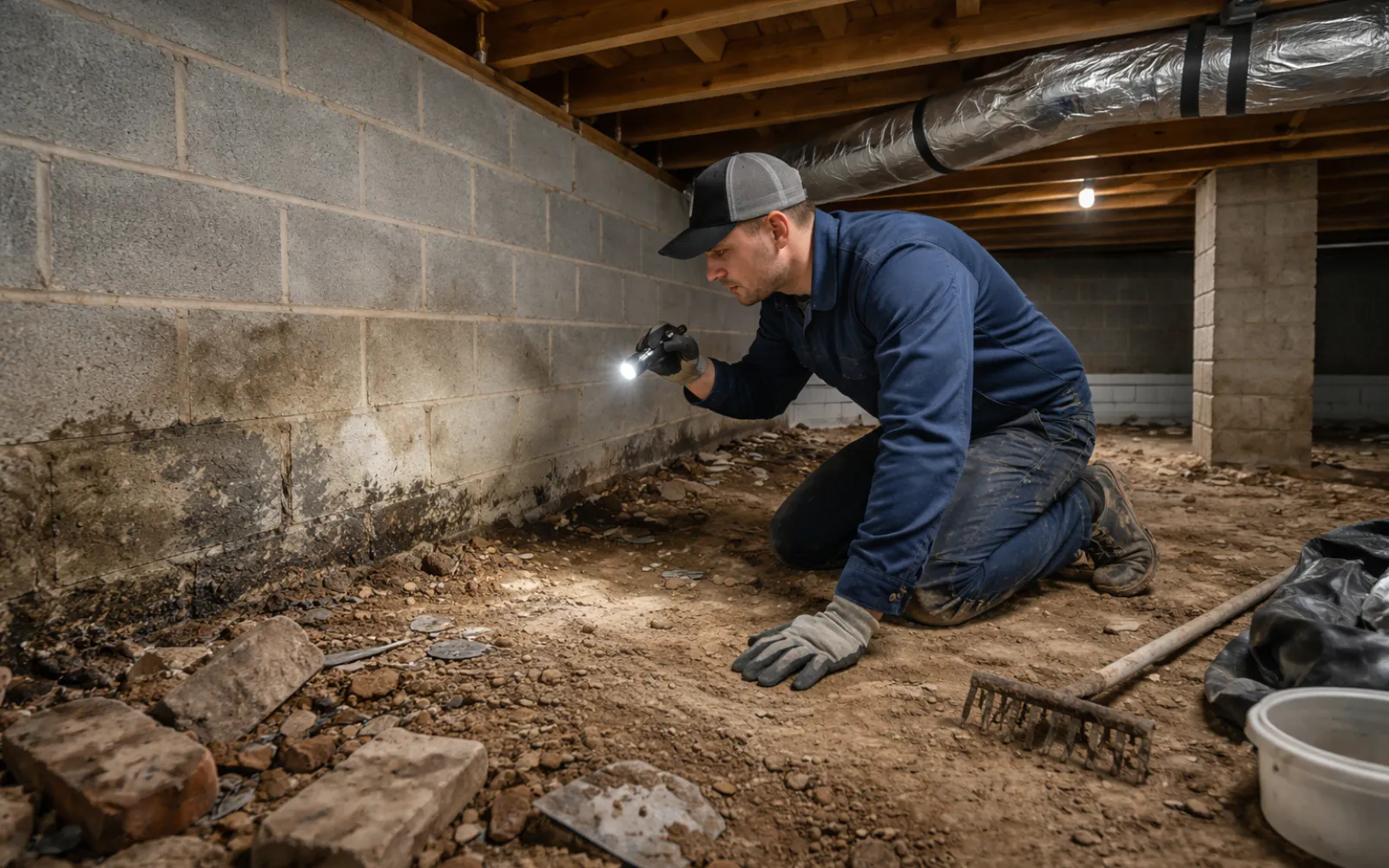
Crawl Space Moisture and Mold: What Homeowners Should Know
A musty smell near the crawl space access or a report of damp insulation can leave you wondering what’s happening beneath your home. You may rarely see the space, but its moisture conditions deserve attention.
Crawl space mold prevention starts with identifying where moisture comes from and understanding the condition of affected materials. A ground covering, drying equipment, and drainage repairs each address different parts of that problem.
Tina, Spotless’s co-owner, specifically recommends monitoring crawl spaces alongside the home’s occupied floors. That broader view supports preventing mold by controlling moisture, including in areas you don’t visit every day.
Where Does Crawl Space Moisture Come From?
Ground Moisture
Exposed soil can release water vapor into the crawl space. The Department of Energy’s guidance on crawl space ground coverings explains how a continuous vapor barrier helps reduce that moisture pathway.
The barrier needs appropriate coverage and detailing. A loose or damaged sheet may leave areas exposed, and ground coverage doesn’t resolve every source of water.
Water Entry and Plumbing Leaks
Rainwater runoff, drainage problems, and openings around the foundation can allow liquid water into the space. Plumbing leaks or equipment condensate can add moisture from inside the building.
Standing water needs investigation before the crawl space is enclosed or insulated. Find out whether it’s linked to rain, plumbing use, equipment operation, or another condition.
Humid Outdoor Air
Warm, humid air entering a cooler crawl space can condense on framing or other cold surfaces. Opening vents isn’t automatically a drying solution when outdoor air is adding moisture.
Understanding crawl space mold means considering those possibilities together. Tina recommends involving appropriate building specialists:
“You want those people to come in and help you to discern whether or not you have other things going on.”
Tina Craig
The assessment should guide the work. If another part of your home has a basement, our guide to basement mold and moisture problems covers related below-ground concerns.
Not sure what’s keeping the space damp? Ask Spotless to assess the affected areas and discuss which moisture sources need investigating.
What Should Homeowners Check and Monitor?
You don’t need to crawl beneath the house to explain what you’ve noticed. Report observations from accessible areas and let an appropriately equipped professional assess unsafe or difficult-to-reach spaces.
Useful information includes:
- Musty smells near the access point or in adjacent rooms.
- Standing water visible from a safe vantage point.
- Previous reports of damp insulation or affected wood.
- Changes after rain or a known plumbing leak.
- Persistent humidity readings from a suitably placed remote monitor.
These observations help guide an investigation; they don’t establish whether crawl space mold is present or how extensive it is.
Tina suggests comparing inexpensive humidity monitors:
“And I tell our clients they need to have two side by side.”
Tina Craig
If readings differ substantially, check batteries and manufacturer guidance before trusting either device. Agreement between monitors doesn’t establish calibration.
Air readings also don’t confirm whether wood or insulation is dry. Ask what material-moisture checks are appropriate when damage or persistent dampness is suspected.
Noticed persistent dampness or inconsistent readings? Share your observations with Spotless and ask what further checks are appropriate.
What Do Vapor Barriers, Drainage, and Dehumidifiers Actually Do?
Before choosing a product or system, ask which moisture source it’s intended to address. Crawl space mold prevention may require several measures working together.
| Measure | Main purpose | What still needs checking |
| Drainage and leak repairs | Address identified liquid-water sources | Existing contamination and remaining damp materials |
| Ground vapor barrier | Reduce moisture entering from exposed soil | Plumbing leaks, drainage, and other moisture pathways |
| Dehumidification or designed conditioning | Manage moisture in the crawl space air | Material dryness, equipment maintenance, and existing growth |
| Complete closure or encapsulation system | Coordinate ground coverage, air control, insulation, and drying as appropriate | Whether the design addresses the property’s conditions |
Department of Energy water-management guidance emphasizes addressing drainage and moisture problems before sealing and insulating a crawl space.
Research illustrates why the complete approach matters. A 2004 study of 12 homes in the southeastern United States found that summer relative humidity in closed crawl spaces was generally below 60%, while wall-vented spaces were often above 80%.
Both groups had ground coverings. The closed spaces also used coordinated sealing and drying measures, with configurations changing during the study. Those results don’t establish what a liner or sealed vents alone would achieve in your home.
Tina emphasizes ongoing monitoring:
“But they do need to be watching their humidity levels on all floors of the home and in their crawl spaces.”
Tina Craig
If you’re considering crawl space vapor barrier installation in Lexington, ask what the proposed work includes. A ground covering and a complete closure system aren’t interchangeable descriptions. A qualified contractor should explain the drying strategy and any associated building requirements before changes begin.
Before choosing a liner or drying system, ask Spotless which moisture conditions need addressing and what the proposed work includes.
What If Crawl Space Mold Is Already Present?
Assess the Affected Materials
A vapor barrier or dehumidifier doesn’t remove existing crawl space mold. The assessment needs to consider affected materials, access, and the extent of the problem.
Tina explains why materials matter:
“And so it’s looking for materials it can do that with, and that’s paper and drywall and cardboard and dust and it’s looking for that.”
Tina Craig
In a crawl space, affected wood, insulation, stored materials, and other surfaces may need different decisions. Ask what can be cleaned, what needs removal, and how those decisions relate to the findings.
Coordinate Remediation With Moisture Repairs
The EPA’s homeowner mold guidance explains the importance of addressing both growth and the moisture problem. Simply killing mold isn’t enough; affected areas need appropriate cleaning or removal.
If framing appears damaged or rot is suspected, a suitably qualified specialist should assess structural concerns. Don’t enter a hazardous space or disturb suspect materials to investigate yourself.
The proposed plan should make clear how remediation and moisture repairs will be coordinated, including who handles each part.
Suspect mold on framing or insulation? Ask about professional mold remediation in Lexington before covering materials or enclosing the space.
What Should Happen Before the Work Is Signed Off?
Tina cautions against rushing past unresolved issues:
“So you’ve got to make sure you take the time before you rush to put the home back together.”
Tina Craig
Crawl space mold prevention continues through completion and maintenance. Before the project ends, ask:
- Which moisture sources were identified and addressed?
- Has necessary remediation been completed?
- How were affected materials checked for dryness?
- Is the ground covering complete and appropriately detailed?
- How will drying equipment or conditioning be maintained?
- What monitoring and follow-up are recommended?
Get an explanation you understand and keep the records you’re given. Ask what changes should prompt another call, such as renewed dampness or equipment that stops draining.
Before the project is completed, ask Spotless to explain the moisture checks, maintenance needs, and follow-up steps for your property.
Give the Space Beneath Your Home Appropriate Attention
Start by understanding the sources of moisture. Then choose suitable controls, address existing contamination, and monitor how the space performs afterward. A ground barrier, repairs, and drying equipment can each have a role, depending on the findings.
Tina’s advice is to include crawl spaces when monitoring the home and investigate problems carefully. You don’t need to enter an unsafe space or diagnose concealed damage yourself.
For homeowners in Lexington and Central Kentucky, Spotless can help assess crawl space dampness and suspected mold. Contact our team to explain what you’ve noticed and discuss appropriate next steps.
Spotless is the most trusted name in restoration in central Kentucky including Lexington, Nicholasville and surrounding communities.
Specializing in health-focused mold remediation and water damage restoration, we leave mold-affected clients with a healthier home.
Call 859-459-0424 and speak to a technician today!