
How Fast Does Mold Grow After Water Damage?
Mold can begin growing within 24–48 hours after water damage under suitable conditions. That’s a reason to act promptly, even if you can’t see any growth yet.
You’ve found the leak. How much time do you have? Tina, Spotless’s co-owner, advises homeowners to take drying seriously from the start.
Leaks are common: the 2023 American Housing Survey reported water leakage originating inside 11.2 million occupied U.S. homes. That doesn’t mean each developed mold, but it shows how many households face this problem.
Understanding the timing helps you respond. Our guide to preventing mold from coming back covers the longer-term work too.
Can Mold Really Start Growing Within 24–48 Hours?
Yes, conditions can support growth that quickly. Tina emphasizes this when homeowners ask whether drying can wait:
“Mold can start to overtake or colonize inside of a home within twenty-four to forty-eight hours.”
Tina Craig
The EPA’s water damage guidance recommends responding within 24–48 hours to help prevent mold. It also explains that growth can occur within that window and doesn’t invariably happen immediately afterward.
The timing of mold growth after water damage varies. The drying window is guidance for prompt action, rather than permission to wait.
| What you’ve noticed | What it tells you |
| You’ve just discovered water damage | You know when you found it; the leak may have started earlier. |
| Materials are still damp | Drying needs attention, whether or not mold is visible. |
| Materials have been wet beyond 48 hours | Existing growth is a possibility that needs considering during assessment. |
There’s also a difference between growth beginning and a patch becoming obvious. You shouldn’t rely on spotting discoloration to decide when help is needed.
If you discovered damage after being away, tell the restoration team when the area was last known to be dry. An uncertain starting time is useful information when they’re assessing the problem.
Still dealing with wet materials? Call Spotless now to discuss drying and assessment before the damage has more time to develop.
What Makes Mold Grow Faster After a Leak?
Moisture That Remains Available
An ongoing leak keeps adding water. Moisture trapped inside an enclosed space can also remain after you’ve dealt with the water you can reach.
Mold growth after water damage depends partly on how long affected materials stay damp. Mopping the floor helps with accessible water, but it doesn’t establish what’s happening beneath it.
Materials That Stay Damp
Tina explains why common household materials matter:
“And so it’s looking for materials it can do that with, and that’s paper and drywall and cardboard and dust and it’s looking for that.”
Tina Craig
The EPA’s explanation of mold growth identifies materials such as wood, paper, carpet, and insulation as possible growth sites when moisture is present.
Temperature, the material involved, mold type, and drying conditions influence the timing. You can’t calculate a reliable deadline from the size of the puddle or how warm the room feels.
When you call for help, mention what got wet. Flooring, wallboard, stored cardboard boxes, and insulation can need different assessments and decisions about drying or removal.
Unsure whether damp drywall, flooring, or insulation needs attention? Ask Spotless to assess the affected materials and explain your options.
Can Mold Be Growing When the Surface Looks Dry?
Yes. A dry-looking finish doesn’t confirm that the materials behind or beneath it are dry. Mold growth after water damage may involve concealed areas that you can’t assess by looking around the room.
Tina has seen investigations reveal more than homeowners expected:
“And many people are astounded once the home gets opened up during the mitigation to discover that they actually had other issues going on.”
Tina Craig
The EPA’s prevention guidance highlights hidden areas that can be overlooked during drying, including walls, ceilings, crawl spaces, and attics.
Tell your restoration professional about:
- Musty smells that continue after the visible water is gone.
- Swollen trim, soft drywall, or changing discoloration.
- Dampness returning after rain or plumbing use.
These observations help guide investigation; they don’t prove mold is present. Appropriate moisture measurements can help establish which materials are still affected. Ask what needs checking before you open anything yourself.
If the damage is below ground level, our guide to basement moisture and mold prevention explains related concerns.
The surface looks dry, but something still seems wrong? Arrange an assessment with Spotless before covering or repainting the area.
What Should You Do While Waiting for Professional Help?
Reducing the risk of mold growth after water damage starts with a prompt response that suits the conditions.
- Check for hazards. Stay out of areas with suspected electrical or structural dangers. Don’t enter water to reach electrical equipment, and leave sewage or contaminated floodwater cleanup to qualified professionals.
- Stop the source if it’s safe. Shut off an accessible water supply for a plumbing leak. Arrange professional help for roof damage.
- Contact a restoration team. Describe the source, affected materials, estimated timing, and any existing mold.
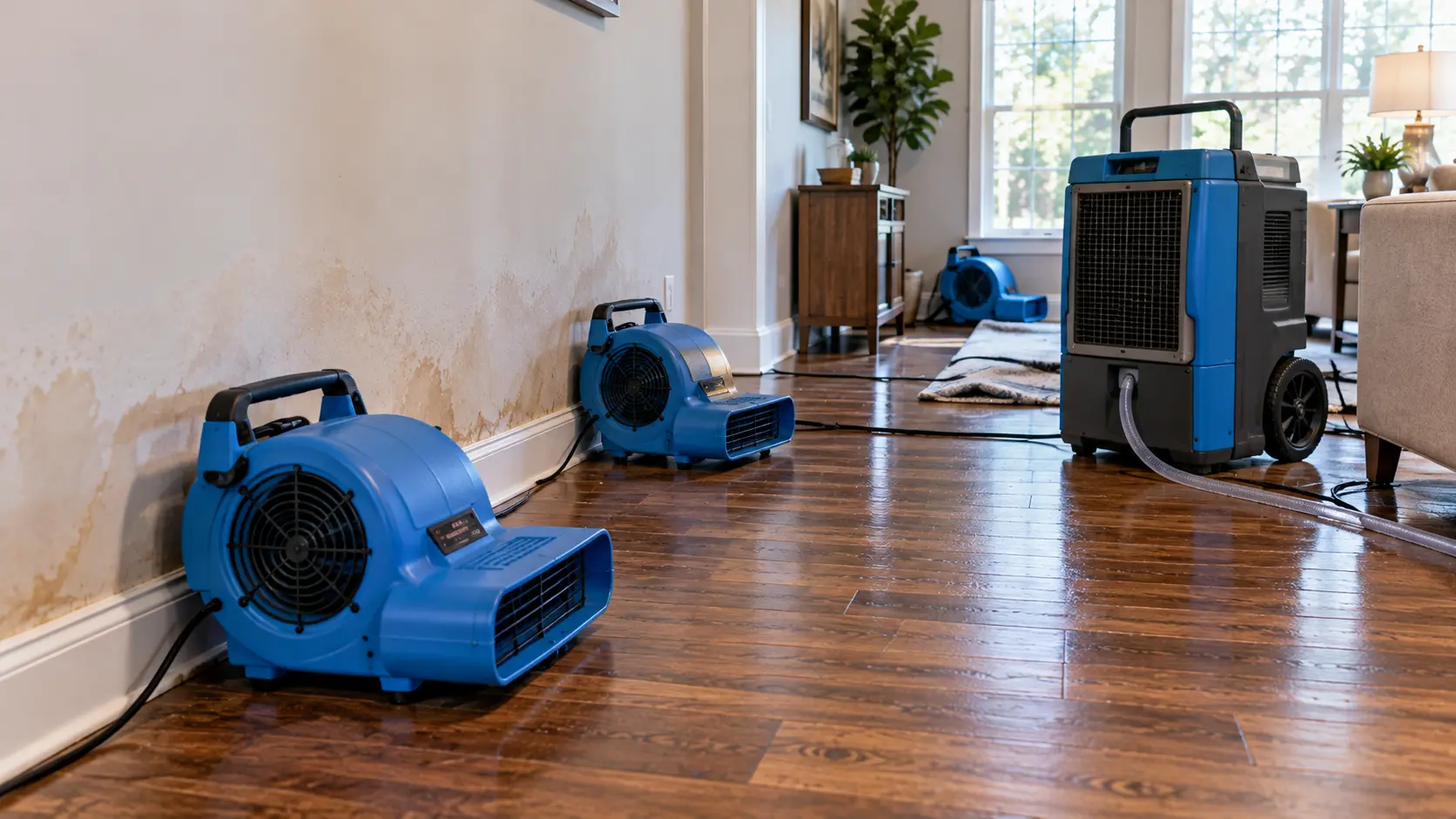
- Ask about temporary drying. Find out what you can safely do while waiting, including whether dehumidification is appropriate.
Tina describes dehumidification as a useful temporary measure:
“That’s the best thing you can do to triage until you can get the troops there to get it under control. Dehumidify.”
Tina Craig
A dehumidifier doesn’t replace extraction or remediation. The EPA also advises against using fans where mold is already visible, because they may spread it.
Have an active leak or flooded room? Call Spotless for help deciding what needs to happen next.
How Do You Know When Drying Is Complete?
Equipment running for several days doesn’t, by itself, tell you that the affected materials are ready for repairs. For mold growth after water damage, the relevant issue is whether moisture remains available in those materials.
Tina cautions against rushing reconstruction:
“So you’ve got to make sure you take the time before you rush to put the home back together.”
Tina Craig
Before work resumes, ask your restoration team:
- Which materials were affected, including concealed areas?
- What moisture measurements were taken?
- What drying criteria were used, and have they been met?
- Has the water source been repaired?
- Is any remediation or other specialist work still outstanding?
You deserve a clear explanation of the drying progress and remaining work. Ask how the findings affect decisions about replacing flooring, closing walls, or reinstalling insulation.
If discoloration remains, ask whether remaining mold stains mean active growth. Appearance alone can’t settle that question or confirm the work is complete.
Keep the repair records, drying information, and maintenance instructions you’re given. They’ll help you understand what’s been addressed and what needs monitoring afterward.
Before repairs begin, ask Spotless what drying checks and follow-up work are appropriate for your property.
Act Promptly, Then Check That the Materials Are Dry
Mold can begin growing quickly under suitable conditions, so arrange help as soon as you discover water damage. Waiting for a visible patch can delay attention to materials that are already damp.
Tina’s advice is to respond promptly and give the investigation enough attention. Find out what got wet, address the source, and understand how drying is being checked before repairs begin.
If you’re in Lexington or Central Kentucky and aren’t sure what your water damage needs, contact Spotless. We’ll listen to what you’ve noticed and help you understand the next steps.
Spotless is the most trusted name in restoration in central Kentucky including Lexington, Nicholasville and surrounding communities.
Specializing in health-focused mold remediation and water damage restoration, we leave mold-affected clients with a healthier home.
Call 859-459-0424 and speak to a technician today!