
Attic Mold and Insulation: When Mold Gets into Blown-In Insulation
You’ve been told there’s mold in the attic. Does that mean all the insulation needs replacing? The answer depends on the material, moisture history, contamination, and extent of damage.
A mark on roof sheathing doesn’t establish the condition of every layer beneath it. Equally, insulation looking dry from above doesn’t explain what happened during a leak or whether concealed materials are affected.
Tina, Spotless’s co-owner, emphasizes investigating the building before rushing repairs. That approach helps homeowners make informed decisions about preventing mold by resolving moisture problems, including in spaces above their ceilings.
How Moisture Reaches the Attic
Roof Leaks and Water Entry
Roofing and flashing defects can allow water to reach insulation and surrounding materials. Damage isn’t always obvious in the room below, so tell your assessor about previous leaks or roof repairs as well as recent changes.
Air Leaking From the Living Space
Moisture-laden indoor air can move through ceiling gaps into a colder attic. When it reaches sufficiently cold surfaces, condensation can develop on roof sheathing or framing.
The Department of Energy’s insulation guide states that air movement accounts for more than 98% of water-vapor movement in building cavities. This illustrates why controlling air leakage matters; it isn’t a measure of how many attics have mold.
Investigating mold in attic insulation therefore means checking air pathways as well as insulation coverage. Those are different parts of the building’s moisture-control system.
Exhaust and Ventilation Problems
Bathroom and kitchen exhaust should discharge outdoors. Department of Energy guidance explains how improperly terminated exhaust and air leaks around fan housings can contribute to attic moisture.
Tina recommends involving the appropriate building specialists:
“So that means foundation specialist, plumbing specialist, roofing specialist, insulation specialist.”
Tina Craig
Suspect a roof leak or recurring attic condensation? Ask Spotless to assess the affected areas and discuss which repairs or specialists may be needed.
How Blown-In Insulation Can Become Affected
“Blown-in” describes how insulation is installed, rather than identifying a single material. Before deciding what needs doing, establish what insulation is present and how it has been affected.
The assessment may need to distinguish between:
- Insulation directly affected by a leak or other water damage.
- Suspected contamination associated with nearby mold growth.
- Discoloration that needs interpretation.
- Moisture or damage beneath the visible layer.
Tina explains why affected materials deserve attention:
“And so it’s looking for materials it can do that with, and that’s paper and drywall and cardboard and dust and it’s looking for that.”
Tina Craig
That general principle doesn’t mean every insulation product supports growth in exactly the same way. Decisions about mold in attic insulation need to account for the material, moisture history, and contamination found.
Photographs can help explain a concern, but color alone doesn’t settle those questions. Tell the assessor about when water entered, how long materials may have been wet, and any work already attempted.
Don’t disturb unidentified older loose-fill insulation. If vermiculite is present, the EPA advises leaving it undisturbed because it may contain asbestos. Any necessary removal requires an appropriately trained and accredited asbestos contractor.
Unsure what insulation you have or whether it’s affected? Contact Spotless before disturbing or covering the material.
Does Affected Insulation Need to Be Removed?
Some situations call for removal and replacement. The EPA’s clean-water-damage guidance recommends discarding and replacing water-damaged cellulose and fiberglass insulation.
Other observations need interpretation before a removal scope is decided:
| Situation | What needs establishing |
| Water-damaged cellulose or fiberglass | The affected area and replacement scope, following appropriate guidance |
| Suspected contaminated loose-fill insulation | Material type, extent of contamination, and appropriate handling |
| Discolored roof sheathing above insulation | Whether growth or moisture damage is present and whether insulation is affected too |
| Unidentified older insulation | Material identification and necessary precautions before disturbance |
Tina has seen investigations reveal additional problems:
“And many people are astounded once the home gets opened up during the mitigation to discover that they actually had other issues going on.”
Tina Craig
For mold in attic insulation, access and assessment may change what’s understood about the affected area. Ask the contractor to explain the findings behind the proposed removal scope.
Before agreeing to insulation replacement, ask Spotless what’s affected, what needs removal, and how the proposed scope was determined.
What Professional Attic Remediation May Involve
Addressing mold in attic insulation may involve several coordinated stages:
- Assessment. Identify affected materials and investigate roof leaks, air leakage, exhaust defects, or other moisture sources.
- Work planning. Decide on appropriate access, containment, air filtration, and material-handling precautions.
- Insulation removal where required. Establish the affected scope and suitable removal method.
- Cleaning remaining surfaces. Use methods appropriate to the materials and conditions.
- Drying and repairs. Coordinate necessary work before replacement insulation or finishes are installed.
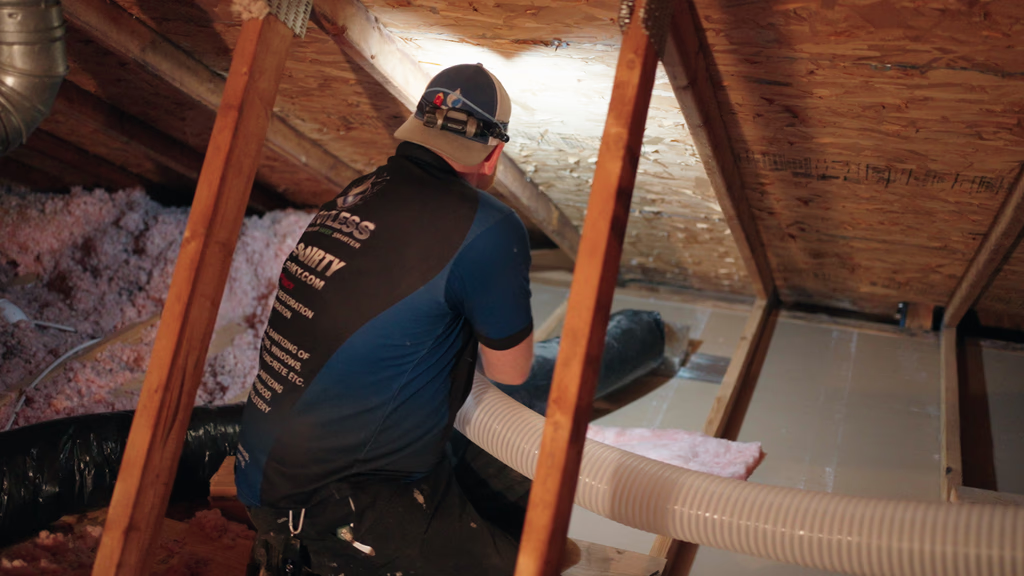
Spotless has specialized equipment for removing blown-in insulation when necessary as part of its attic mold removal and insulation handling in Lexington. The appropriate scope depends on the assessment.
Tina encourages bringing in the expertise needed to understand the building:
“You want those people to come in and help you to discern whether or not you have other things going on.”
Tina Craig
Ask who is responsible for roofing, insulation, or other repairs, and how those tasks fit together. Don’t rake through suspect insulation or try to vacuum it yourself to work out the extent.
Need help with suspected contaminated insulation? Ask Spotless about assessing the attic and planning appropriate removal and remediation.
What Should Be Checked Before New Insulation Goes In?
Wanting the attic closed up and the project finished is understandable. Tina cautions against rushing that stage:
“So you’ve got to make sure you take the time before you rush to put the home back together.”
Tina Craig
Preventing further mold in attic insulation means checking the conditions before replacement. Ask whether:
- Identified roof or plumbing leaks have been repaired.
- Necessary remediation is complete.
- Affected materials have been appropriately checked for dryness.
- Relevant ceiling air leaks and exhaust defects have been addressed.
- Ventilation and insulation details suit the attic design.
- Replacement insulation will follow appropriate installation requirements.
- Follow-up monitoring and responsibilities are understood.
Adding insulation doesn’t automatically correct air leakage. Department of Energy attic guidance treats air leakage, indoor moisture, and the roof assembly’s drying potential as related considerations.
Ask what evidence supports moving to replacement. Keep the repair details, drying information, and follow-up instructions you’re given. Those records help explain what’s been addressed if another contractor works on the property later.
Before replacement insulation is installed, ask Spotless what moisture checks, repairs, and follow-up steps your attic needs.
Make Insulation Decisions With the Moisture Problem in View
The important questions are what caused the moisture, which materials are affected, and what needs completing before replacement. A thorough assessment helps connect those decisions.
Tina’s advice is to investigate carefully and give necessary repairs enough attention. You don’t need to enter an unsafe attic or diagnose insulation from photographs yourself.
For homeowners in Lexington and Central Kentucky, Spotless can help assess attic moisture, suspected mold, and affected insulation. Contact our team to explain what you’ve noticed and discuss the appropriate next steps for your property.
Spotless is the most trusted name in restoration in central Kentucky including Lexington, Nicholasville and surrounding communities.
Specializing in health-focused mold remediation and water damage restoration, we leave mold-affected clients with a healthier home.
Call 859-459-0424 and speak to a technician today!