
What Are the First Signs of Black Mold?
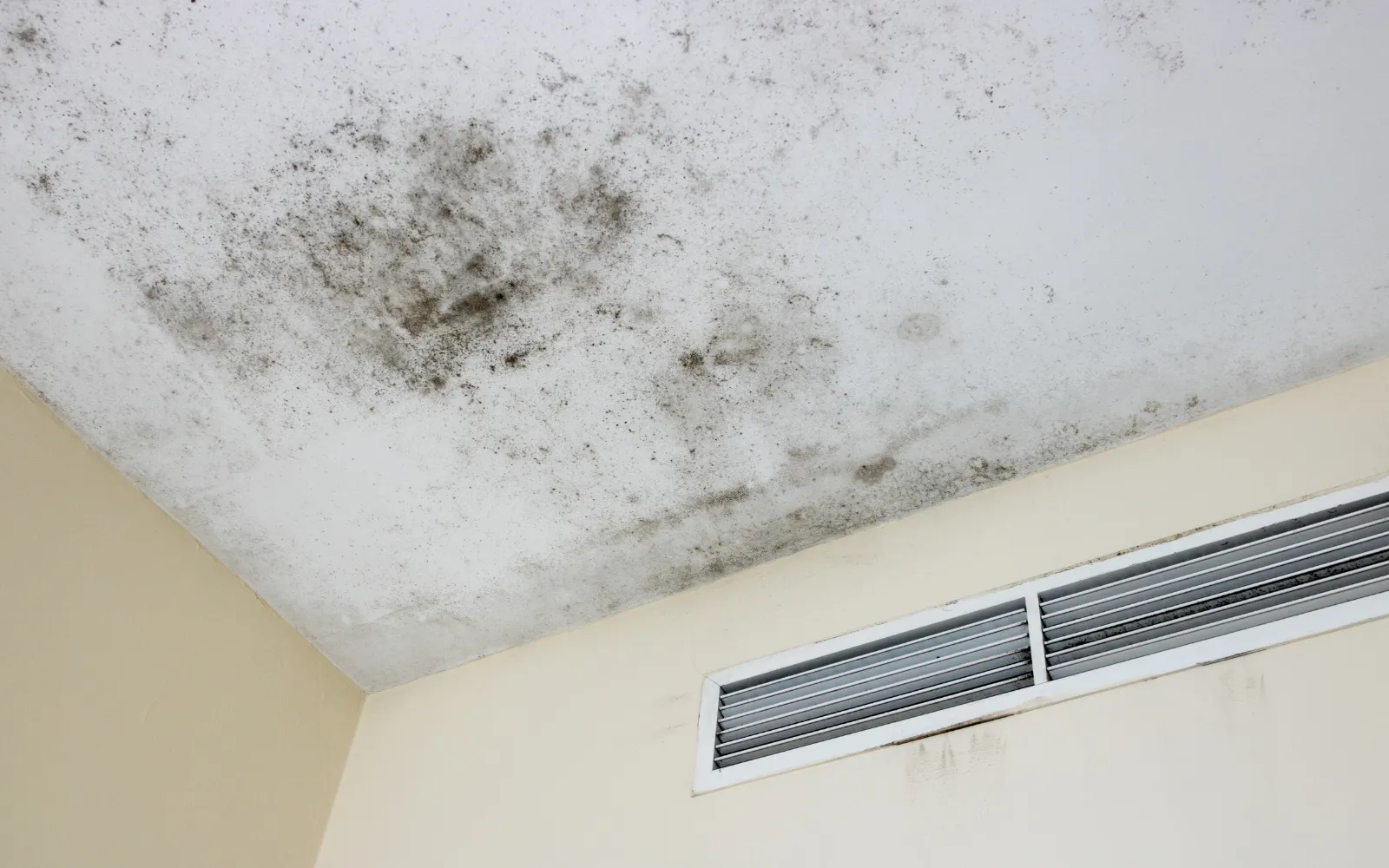
Most homeowners picture black mold as something obvious: a large, dark patch spreading across drywall or covering the corner of a basement.
Sometimes it is obvious. Often, it isn’t.
The first clue might be a small dark mark beside a window. A musty smell you can’t quite place. A baseboard that suddenly doesn’t sit flush against the wall. Or a ceiling that looks slightly different from the last time you paid attention to it.
Then comes the uncomfortable question: is there mold somewhere I can’t see?
Caleb Jones, Lead Inspector at Spotless, hears another version of that question several times a week: “I think I have black mold.”
The first thing he explains is that appearance can only tell you so much.
“There’s a lot of molds that are black in color. You don’t know unless you do laboratory testing.”
Caleb Jones
In other words, you can’t reliably identify Stachybotrys chartarum (the mold most people mean when they say “toxic black mold”) simply because something looks black. CDC guidance makes a similar point in practical terms: Stachybotrys is greenish-black, but indoor molds should be addressed regardless of species when they’re growing in the home.
So, what are the first signs of black mold worth paying attention to? Caleb usually starts with something more useful than color: moisture.
- 1. Dark Spots or Discoloration Near a Moisture Source
- 2. Walls, Floors or Ceilings That Have Started to Change Shape
- 3. A Musty Smell That Keeps Coming Back
- 4. Mold Can Be Easier to See When You Stop Looking Straight at It
- 5. Check the Parts of Your Home You Normally Ignore
- Catch the Moisture Problem, Not Just the Black Spot
1. Dark Spots or Discoloration Near a Moisture Source
One of the first signs of black mold homeowners tend to notice is dark spotting or discoloration.
But where that discoloration appears matters.
A dark patch beside a leaking window deserves more attention than an unidentified mark on a dry, undamaged surface. The same goes for staining below plumbing, around a water heater, beneath a roof leak, or in a basement that’s had repeated water problems.
When Caleb is investigating what a homeowner believes may be black mold, the history of the building helps guide him.
“It’s a lot more emphasis on finding the source of what is causing that water damage.”
Caleb Jones
That’s because mold needs moisture. CDC notes that Stachybotrys chartarum can grow on cellulose-rich materials such as gypsum board and fiberboard when there’s sustained moisture from leaks, water damage, infiltration, condensation or flooding.
And dampness itself is hardly unusual. Lawrence Berkeley National Laboratory reviewed several U.S. housing studies and calculated a population-weighted average prevalence of dampness or mold of 47% across those studies. That doesn’t mean 47% of American homes contain “toxic black mold”; it shows how widespread the moisture conditions associated with indoor mold can be. (Source: Lawrence Berkeley National Laboratory)
If you’re wondering what the first signs of black mold are, don’t look only at the spot. Look at what’s happening around it.
If dark growth keeps returning near a leak or water stain, don’t just clean the mark again. Find out why that area keeps getting wet
2. Walls, Floors or Ceilings That Have Started to Change Shape
Some of the first signs of black mold aren’t black at all.
They’re signs that water has gotten into building materials.
During inspections, Caleb pays attention when something that should be straight or flat suddenly isn’t.
“If anything is shaped differently than what it should be, which is mostly flat, that is one of the biggest things.”
Caleb Jones
That might mean a baseboard beginning to separate from the wall. Flooring that has started to buckle. A ceiling that appears bowed. Drywall that’s swelling or changing shape.
None of those things proves black mold is growing behind the surface. They do, however, tell you that something has changed and moisture is one possible reason.
The EPA puts this pretty plainly: the key to mold control is moisture control, and homeowners should fix water problems rather than treating mold as an isolated surface issue.
So if you’re asking what are the first signs of black mold, look beyond obvious spotting. A house can show you evidence of the conditions mold needs before you see a dramatic colony growing across a wall.
Imagine a bedroom baseboard that’s slowly pulling away beneath a window that’s leaked during heavy rain. Painting the trim or caulking the visible gap might make things look better. It won’t tell you whether the drywall or insulation behind it has remained wet.
A buckled ceiling, warped floor or separating baseboard shouldn’t automatically trigger panic. But it shouldn’t be dismissed as cosmetic until you understand why it changed.
3. A Musty Smell That Keeps Coming Back
Sometimes your nose notices the problem before your eyes do.
A persistent musty or earthy odor can be one of the first signs of black mold or another indoor mold problem, especially when the smell is strongest in a damp basement, closet, utility area or room with a history of water damage.
Caleb describes entering basements where the mold problem is significant enough that he can smell something is wrong before the full extent of the visible growth becomes obvious.
“If you go into a basement that has a pretty significant mold problem and you can smell it in the air…”
Caleb Jones
A smell can’t tell you which species of mold is present. There’s no reliable “Stachybotrys smells exactly like this” test you can perform with your nose.
But a recurring musty odor is still useful information.
Ask yourself:
Does it get stronger in one room?
Is it noticeable after rain?
Does it seem worse near the HVAC system, basement or a previous leak?
Does the smell disappear for a while and then return?
CDC notes simply that mold can smell musty, and EPA guidance says visible mold and moldy odors shouldn’t remain once a cleanup has been successfully completed.
If a musty smell keeps returning, treat it as a clue to investigate not something to cover with candles, sprays or air freshener.
4. Mold Can Be Easier to See When You Stop Looking Straight at It
One of Caleb’s favorite inspection techniques doesn’t involve an expensive piece of testing equipment. It starts with a powerful flashlight.
When he’s checking certain wood surfaces, particularly in a basement or another area where mold is suspected, he’ll turn the main lights down and aim his flashlight across the surface at an angle.
Looking straight at the same piece of wood can make it appear relatively normal. Side-lighting can make subtle surface changes much easier to see.
“If you shine the flashlight on it, it’ll look normal. But if you shine the flashlight down or up, you can actually see mold spores that are present without looking at it head on.”
Caleb Jones
Homeowners are often surprised when Caleb demonstrates it because they’ve walked past the same surface every day without noticing anything unusual.
If you’re investigating what the first signs of black mold might look like, the lesson isn’t that a flashlight can diagnose mold. It can’t.
It certainly can’t identify Stachybotrys.
What Caleb’s technique shows is how easy subtle surface contamination can be to overlook when you’re only looking from across the room.
And don’t scrape, sand or brush a suspicious area simply because you want a closer look. EPA warns that investigating suspected hidden mold can require caution because disturbing contaminated materials can release mold spores.
See something suspicious? Photograph it, check for a nearby moisture source and get advice before you start pulling materials apart.
5. Check the Parts of Your Home You Normally Ignore
When Caleb talks about what the first signs of black mold look like in real homes, one of his simplest pieces of advice may be the most useful:
Actually look at the places you normally walk straight past.
“Look at the closet ceiling that you haven’t looked at in six months. Look around your HVAC system, check your water heater.”
Caleb Jones
Think about your own house.
When did you last look closely at the ceiling inside a packed closet?
What about the wall behind the water heater?
The area around your HVAC filter?
The basement framing behind stored boxes?
The window that leaked last year but hasn’t caused an obvious problem since?
These are exactly the sorts of areas Caleb routinely checks.
During a professional inspection, he may look inside accessible parts of the HVAC system, take photographs, inspect known water sources and use tools such as a borescope when an area can’t be readily seen.
That’s because not seeing mold in the middle of the living-room wall doesn’t mean there’s nothing worth investigating.
EPA guidance acknowledges the same challenge: hidden mold can occur on the back of drywall or wallpaper, inside walls around leaking pipes, and in other concealed locations. Disturbing those areas carelessly can make matters worse.
If several warning signs are showing up together – moisture damage, recurring odor, suspicious dark growth and changing building materials – a mold inspection can help you move beyond guessing.
You don’t need to inspect your home obsessively. But paying attention to the places you usually ignore can help you catch a moisture problem before it becomes much harder to deal with.
Catch the Moisture Problem, Not Just the Black Spot
So, what are the first signs of black mold?
Sometimes it’s visible dark growth. Other times it’s a musty smell, a water stain, a buckling floor, a separating baseboard or something suspicious in an area of the home you haven’t looked at closely for months.
No single one of those clues proves you have Stachybotrys chartarum. And color alone can’t tell you which mold species is present.
What the signs can tell you is that there’s something worth investigating.
Caleb sums up the value of catching those changes early:
“If people were more attentive to their bodies and they were more attentive to their homes, then a lot of these problems would get caught pretty early.”
Caleb Jones
If you’re in Lexington or Central Kentucky and you’re seeing several of these warning signs, Spotless can help you find out what’s happening rather than leaving you to guess.
Schedule a mold inspection and get a clearer picture of the moisture, the affected materials and what needs to happen next.
Spotless is the most trusted name in restoration in central Kentucky including Lexington, Nicholasville and surrounding communities.
Specializing in health-focused mold remediation and water damage restoration, we leave mold-affected clients with a healthier home.
Call 859-459-0424 and speak to a technician today!