
Mold Removal vs Mold Remediation: What’s the Difference?
If you’ve found mold in your home, the first thing you probably want is simple: you want it gone.
That’s completely understandable. Mold feels invasive. It raises questions about your home, your air, your belongings, and sometimes your health. But once you start searching online or calling companies, the language can get confusing fast. Some companies say “mold removal.” Others say “mold remediation.” Some use both like they’re the same thing.
They’re related, but they’re not always the same.
“Most of the time it’s a client’s first time ever dealing with like a mold situation. So it’s very, very educational from the start.”
Caleb Jones
The difference matters because mold isn’t always just a surface problem. What you see on the wall, ceiling, floor, or trim may be connected to a leak, humidity, hidden growth, contaminated dust, or poor indoor air quality.
For homeowners in Lexington and surrounding Central Kentucky communities, especially those dealing with mold sensitivity or unexplained symptoms, understanding the difference can help you choose the right next step. Sometimes a small surface issue may be simple. Other times, you need professional mold remediation that addresses the source, spread, and safety of the problem.
Want to learn the whole story on mold remediation? Read our complete guide here.
What Is Mold Removal?
Mold removal usually refers to cleaning or physically removing visible mold. That might mean wiping a surface, scrubbing a small area, cutting out affected drywall, or using a cleaning product to improve how the area looks.
The problem is that the phrase can make mold sound simpler than it is. It can suggest that every spore can be removed from a home, which isn’t realistic. Mold spores naturally exist indoors and outdoors. The real concern is active mold growth inside the house, especially when it’s being fed by moisture.
The EPA explains that mold can’t be eliminated entirely from indoor spaces, but indoor mold growth can and should be prevented by controlling moisture.
So if a homeowner has a tiny bit of surface mildew in a bathroom and the moisture issue is obvious and fixed, basic cleaning may be enough. But if the mold keeps coming back, appears after a leak, affects porous materials, or comes with a musty smell, it’s usually time to look deeper.
That’s where the conversation moves from simple mold removal to mold remediation.
If you’re not sure whether you’re seeing minor surface mildew or a deeper mold issue, Spotless can inspect the area and explain what level of help makes sense.
What Is Mold Remediation?
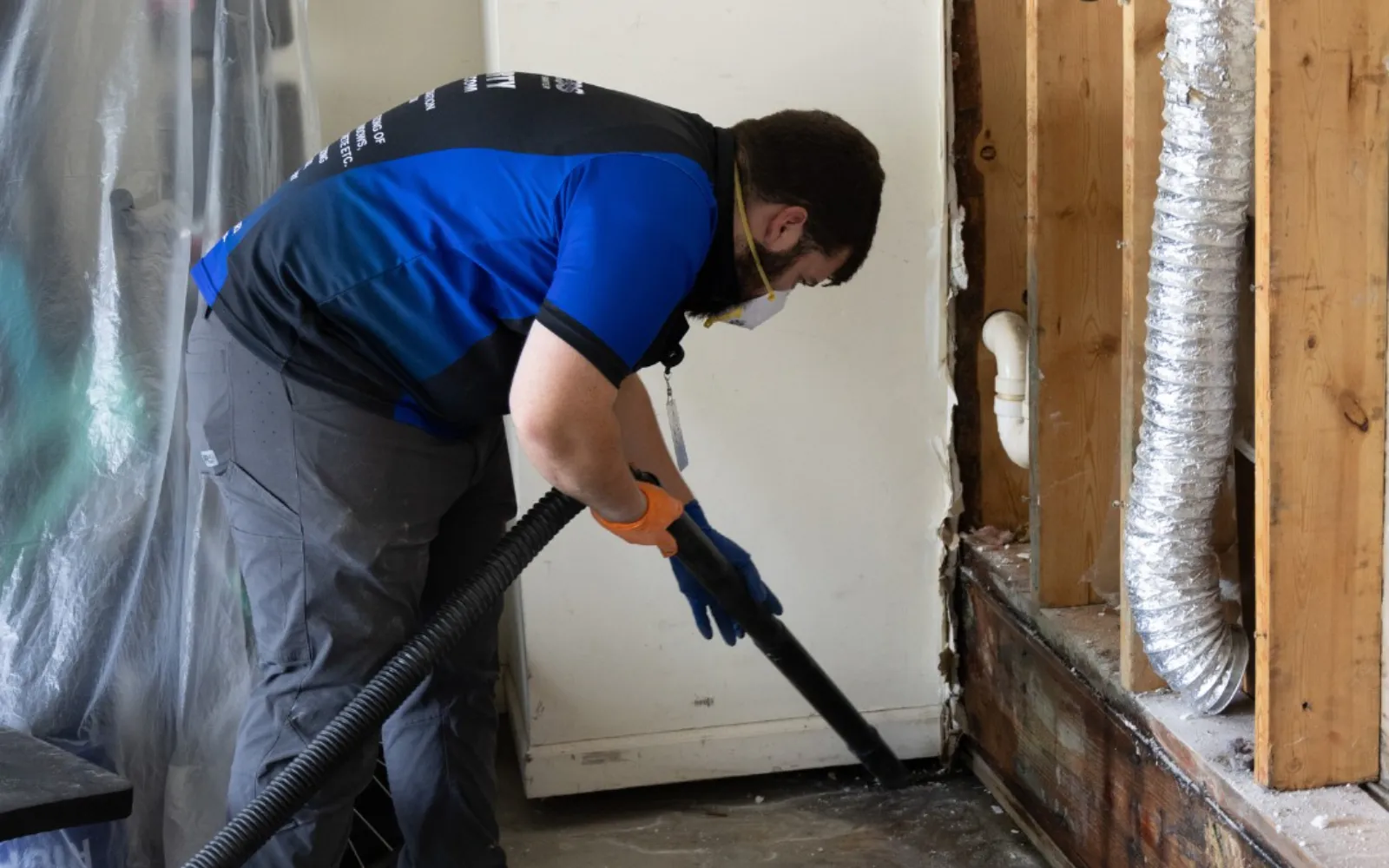
Mold remediation is a more complete process. Instead of focusing only on what’s visible, it looks at why the mold grew, how far the problem may have spread, what materials are affected, and what needs to happen so the home can be brought back to a healthier condition.
A professional mold remediation project may include inspection, moisture detection, containment, negative air pressure, HEPA filtration, removal of porous materials, treatment of remaining surfaces, cleanup, air quality steps, and prevention recommendations.
“Every single house is so different and there’s really not a standard procedure that you can apply in every single situation.”
Caleb Jones
That’s an important point. A bathroom ceiling, a crawl space, a basement wall, an attic, and an HVAC-related mold concern may all require different approaches. A good remediation plan shouldn’t be copied and pasted from one house to another.
For Spotless, mold remediation in Lexington KY starts with understanding the home and the homeowner’s concerns. That includes visible growth, moisture history, air quality, and whether anyone in the home is especially sensitive or worried about mold exposure.
The goal isn’t to make the mold look gone for a week. It’s to address the actual conditions that allowed it to grow.
For homeowners in Lexington and surrounding Central Kentucky communities, Spotless provides mold remediation that looks beyond the surface and focuses on the conditions that allowed mold to grow.
Why Surface Cleaning Often Doesn’t Solve the Problem
A lot of homeowners try to handle mold with bleach, vinegar, or a store-bought spray. It’s easy to see why. If the product lightens the stain or makes the surface look cleaner, it can feel like the problem has been solved.
But mold often grows into or behind materials, especially porous ones like drywall, insulation, wood, carpet, or subflooring. A surface product may change how it looks without reaching the actual growth or fixing the moisture source.
“It will have a visual effect on the mold, but it doesn’t stay wet enough for long enough to actually penetrate into the surface.”
Caleb Jones
That’s one reason mold can seem to disappear and then come back stronger, and why getting a professional mold remediator in can help. The wall looks better for a while, but the material may still be damp, the leak may still be active, or growth may still be sitting where the product couldn’t reach.
Fogging can be misunderstood in the same way. Caleb explained that antimicrobial fog can be a useful tool, and Spotless uses it often as part of a broader plan. But fogging alone isn’t full remediation if active mold is still growing somewhere.
A proper mold remediation plan deals with the source first. Then it uses cleaning, removal, treatment, containment, and air quality tools where they make sense.
If you’ve cleaned the same area more than once and the mold keeps coming back, it’s time to stop treating it like a surface stain and find the source.
The Real Difference: Source, Spread, and Safety
The difference between mold removal and mold remediation isn’t just wording. It’s the depth of the process.
Mold removal focuses on getting rid of visible mold. Mold remediation focuses on why the mold is there, how far it may have spread, and how to reduce the chance of it coming back.
Here’s a simple way to think about it:
| Mold Removal | Mold Remediation |
| Focuses mainly on visible mold | Focuses on the source and affected materials |
| May involve wiping, spraying, or cutting out material | May involve inspection, containment, removal, treatment, cleanup, and prevention |
| May not address indoor air quality | Considers spores, dust, debris, and cross-contamination |
| May not solve the moisture issue | Looks for leaks, humidity, or water damage |
| Can be incomplete if done casually | Designed to reduce recurrence risk |
Containment is a major part of this. When mold-affected materials are disturbed, dust, debris, spores, and other particles can move into areas that weren’t affected before.
“Containment is one of the most useful tools for cross contamination.”
Caleb Jones
That’s why professional mold remediation often includes barriers, negative air pressure, air scrubbers, PPE, and controlled removal. It’s not just about what comes out. It’s about protecting the rest of the home while the work is happening.
Before choosing a company, ask how they’ll protect clean areas of your home while mold-affected materials are being disturbed.
When Do You Need Professional Mold Remediation Instead of Basic Removal?
Not every mold concern needs a major project. But there are situations where basic cleaning isn’t enough and professional mold remediation is the safer path.
Call a professional if:
- Mold keeps coming back after cleaning.
- The mold appeared after a leak, flood, roof issue, or plumbing problem.
- The affected material is drywall, insulation, carpet, subflooring, or another porous material.
- There’s a musty smell, but you can’t find the source.
- Mold is in a crawl space, attic, basement, or near the HVAC system.
- Someone in the home is mold-sensitive, immunocompromised, or feeling worse indoors.
- There’s already been a failed remediation attempt.
Spotless doesn’t diagnose health issues, and symptoms should always be discussed with a qualified medical professional. But the team does take those concerns seriously. If a homeowner says, “I think my house might be making me sick,” that changes the level of care needed during inspection, containment, cleanup, and air quality work.
Professional remediation gives you a clearer picture of what’s happening before you start cutting, spraying, or guessing.
If any of these signs sound familiar, schedule a free visual inspection with Spotless before the problem spreads or gets cleaned incorrectly again.
How Spotless Approaches Mold Remediation Differently
Spotless is a locally owned, IICRC-certified mold remediation company serving Lexington and surrounding Central Kentucky communities. With more than 30 years of experience, the team has seen how stressful mold can be, especially for families dealing with health concerns, past failed remediation, or hidden moisture.
Their approach is built around education, careful inspection, source control, containment, air quality, and prevention. The goal isn’t to scare homeowners or sell unnecessary work. It’s to explain what’s happening, recommend the right scope, and do the job carefully enough that the same problem doesn’t keep coming back.
“My goal is to work with them once in their life.”
Caleb Jones
That’s the real difference between quick mold removal and health-focused remediation. Spotless looks beyond the stain on the wall and considers the materials, moisture, air, and people living in the home.
Expert insight: Caleb Jones, Sales Manager at Spotless, works directly with Lexington-area homeowners to inspect mold concerns, explain remediation options, and build scopes for health-focused remediation projects.
Concerned about mold in your Lexington-area home? Call Spotless to schedule a free visual inspection and get a clear answer about whether you need cleaning, removal, or full mold remediation.
Spotless is the most trusted name in restoration in central Kentucky including Lexington, Nicholasville and surrounding communities.
Specializing in health-focused mold remediation and water damage restoration, we leave mold-affected clients with a healthier home.
Call 859-459-0424 and speak to a technician today!