
How Do Professionals Get Rid of Black Mold?
Black mold is one of those phrases that makes homeowners panic. You see dark staining on drywall, trim, insulation, or a basement wall, and your mind immediately jumps to the worst-case scenario.
That reaction is understandable, but it’s also worth slowing down. Color alone doesn’t tell you the exact mold species or how serious the problem is. Some molds are dark, some are greenish-black, and some look different depending on the surface they’re growing on.
What matters most is that dark mold usually points to a moisture problem that needs to be evaluated carefully.
“I think that there’s a lot of misinformation around mold remediation and home remedies and different things like that.“
Caleb Jones
Professional mold remediation focuses on finding the source, the affected materials, cross-contamination control, air quality, and prevention – not just making the visible mold disappear. We dig into more details in our Lexington mold remediation guide.
First, Professionals Find the Moisture Source
Black mold doesn’t grow without moisture. So before a professional starts removing anything, they need to understand what’s feeding it.
That moisture source could be a plumbing leak, roof leak, basement seepage, crawl space humidity, condensation, appliance leak, poor ventilation, or water damage that wasn’t dried properly. If that source isn’t corrected, the mold can come back after cleanup.
The EPA says the key to mold control is moisture control, which is why professional mold remediation should start with the cause, not just the visible growth.
“The two biggest things for me are moisture prevention and humidity control.”
Caleb Jones
For Lexington-area homes, moisture often shows up in basements, crawl spaces, bathrooms, attics, and areas affected by leaks or humidity. A dark patch on the wall may be the symptom, but the real problem may be behind the surface, and may be a larger problem than you first realized.
If you’ve found dark mold in your home, Spotless can inspect the area and help identify what moisture source may be feeding it.
Then They Inspect the Affected Materials
Once the moisture source is understood, professionals look at the materials involved. This step matters because black mold on the surface of a wall may not tell the full story.
Mold on drywall, for example, may extend behind the wall where you can’t see it. Mold on trim may be connected to damp framing. Mold in an attic may involve insulation. Mold in a basement or crawl space may be tied to humidity, seepage, or wood that’s been wet for too long.
“Every single house is so different and there’s really not a standard procedure that you can apply in every single situation.”
Caleb Jones
That’s why the process has to fit the home. Some materials can be cleaned or treated. Others, especially porous materials, may need to be removed. In some cases, mold testing may also be recommended if identification, documentation, or air quality concerns need to be clarified.
A careful inspection helps prevent two common mistakes: removing more than necessary or cleaning too little and leaving the real problem behind.
Before trying to clean black mold yourself, find out whether it’s only on the surface or inside the material.
Need help? Reach out to Spotless today!
Containment and Air Control Come Before Removal
Before professionals start removing black mold, they should think about what happens when mold-affected material gets disturbed.
Cutting, scraping, pulling, or tearing out contaminated materials can release dust, debris, spores, and other particles into the air. Without containment, those particles can move into cleaner areas of the home.
“Containment is one of the most useful tools for cross contamination.”
Caleb Jones
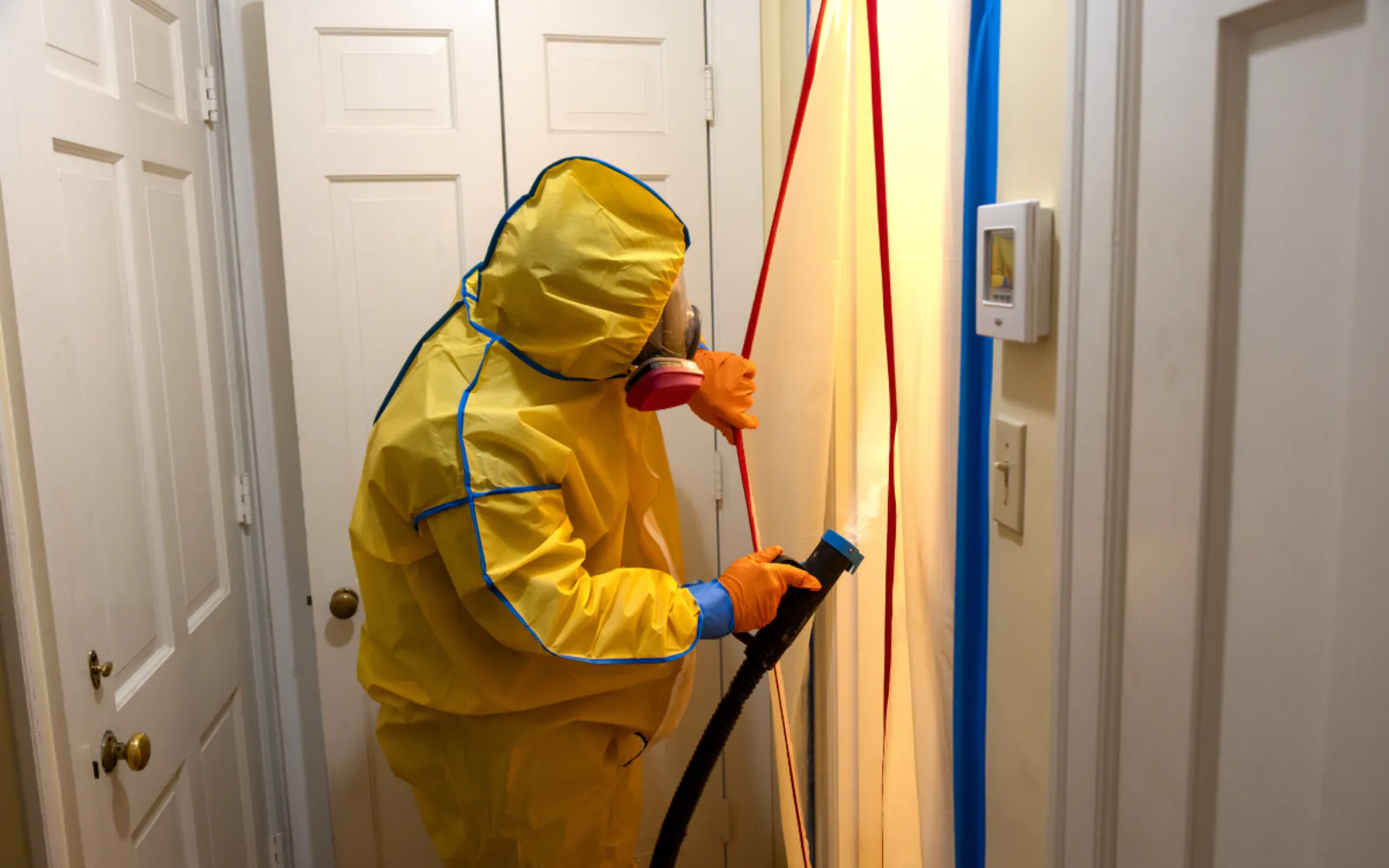
Containment may include plastic barriers, sealed doorways, floor protection, controlled removal paths, and negative air pressure. Air scrubbers may also be used to help filter airborne particles while the work is happening.
This is one of the biggest differences between professional mold remediation and a casual DIY cleanup. The goal isn’t just to remove the moldy material. It’s to do it without spreading the problem through the rest of the home.
Technicians should also use proper PPE, especially when disturbing contaminated materials. That protects the people doing the work and helps keep the process controlled.
Ask your mold remediation company how they’ll protect the rest of your home before they start removing mold-affected materials.
Professionals Remove or Treat the Mold-Affected Materials
After containment is set up, the next step is removing or treating the affected materials. What happens here depends on what the mold is growing on.
Porous materials are usually the hardest to save. Drywall, insulation, carpet padding, ceiling tiles, and similar materials can absorb moisture and contamination. If mold has grown into them, they often need to be removed rather than sprayed or wiped.
“It’s always better to take molded material outside of the environment, especially if it’s extremely porous, like drywall or anything like that where you can’t access the backside of it.”
Caleb Jones
Other materials may be treated if they’re accessible and structurally sound. For example, exposed framing may be cleaned and treated with professional products when removal isn’t necessary or appropriate.
Fogging can support a remediation project, but it doesn’t replace removal when active mold is growing inside materials. A fog won’t reach the backside of drywall or remove contaminated insulation.
If black mold is growing on porous material, don’t assume a spray will solve it. Get a professional opinion before the contamination spreads.
Why Bleach Alone Isn’t the Answer
Bleach can make black mold look like it’s gone. That’s one reason homeowners reach for it first.
But changing the color of the mold isn’t the same as correcting the problem. Bleach may lighten the surface, but it doesn’t always penetrate porous materials, and it doesn’t fix the leak, humidity, or moisture source that allowed the mold to grow.
“It will have a visual effect on the mold, but it doesn’t stay wet enough for long enough to actually penetrate into the surface.”
Caleb Jones
That’s why mold can seem to disappear and then return. The surface looks cleaner for a while, but the material underneath may still be damp or contaminated.
Professional mold remediation uses the right method for the material and the situation. Sometimes that means cleaning. Sometimes it means treatment. Sometimes it means targeted removal.
If you’ve already used bleach or vinegar and the mold came back, it’s time to look for the source instead of repeating the same cleanup.
Call Spotless today
Cleaning, Air Quality, and Prevention After Removal
Once the black mold is removed or treated, the job still isn’t finished. The area needs to be cleaned, the air quality needs to be considered, and the original moisture problem needs to be corrected so the mold doesn’t come back.
Depending on the project, cleanup may include HEPA vacuuming, wiping surfaces, running air scrubbers, antimicrobial fogging, and removing dust or debris from nearby areas. For health-sensitive households, Spotless may also recommend more detailed cleaning, vacating their property during the work, or post-remediation testing.
“We’re really big believers in air quality and making sure that the air quality is improved and any spores and stuff like that that are introduced into the air are taken care of.”
Caleb Jones
Prevention is just as important. If a leak, humidity problem, condensation issue, or ventilation concern isn’t corrected, black mold can return even after a careful remediation.
Health note: Spotless can evaluate and remediate mold conditions in the home, but personal symptoms should be discussed with a qualified healthcare provider.
Once the visible mold is gone, ask your remediation company what’s being done to clean the surrounding area, protect indoor air quality, and reduce the chance of regrowth.
How Spotless Handles Black Mold Concerns in Lexington Homes
Spotless is a locally owned, IICRC-certified firm with more than 30 years of experience helping homeowners in Lexington and surrounding Central Kentucky communities deal with mold and water damage.
Their approach to black mold concerns is careful, practical, and health-focused. The team looks for the moisture source, inspects affected materials, sets up containment when needed, removes or treats mold properly, considers indoor air quality, and helps homeowners understand how to reduce the chance of the problem returning.
Caleb Jones, Sales Manager at Spotless, works directly with homeowners to explain the process and build a scope that fits the home, the materials, and the family’s concerns.
Concerned about black mold in your Lexington-area home? Call Spotless for a free visual inspection and a clear, health-focused remediation plan.
Spotless is the most trusted name in restoration in central Kentucky including Lexington, Nicholasville and surrounding communities.
Specializing in health-focused mold remediation and water damage restoration, we leave mold-affected clients with a healthier home.
Call 859-459-0424 and speak to a technician today!