
Hidden Mold in Your Home: Signs, Smells, Testing, and What to Do Next
If you’re worried about hidden mold in your home, there’s a good chance you don’t have one obvious thing to point to.
Maybe there’s a musty smell you can’t track down. Maybe your allergies seem worse inside the house. Maybe one room feels damp, the HVAC smells off, or the floor near a bathroom has started to warp. Or maybe you’ve had past water damage and you’ve never felt completely confident that everything dried the way it should have.
That uncertainty is what makes hidden mold so stressful. You know something feels wrong, but you can’t see mold growing across the wall. So you’re left wondering: Am I overthinking this, am I crazy? Or is my house trying to tell me something?
At Spotless, this is exactly the kind of call Caleb Jones, our Lead Inspector, handles often. Homeowners throughout Lexington and Central Kentucky reach out because they suspect mold, but there’s no visible growth on the drywall, ceiling, trim, or bathroom sealant.
Watch the full interview here!
“Whenever a client reaches out to me and they don’t have a very specific problem, they just have kind of suspicions of the home.”
Caleb Jones
This guide walks through the hidden mold signs, smells, testing options, and next steps that matter most. It’s not meant to scare you. It’s meant to help you stop guessing, understand your home better, and know when it’s time to bring in a professional.
- Why Hidden Mold Is So Hard to Find
- Mold often starts where homeowners rarely look
- Visual inspection has limits
- The Most Common Places Hidden Mold Shows Up in Lexington Homes
- Signs and Smells That May Point to Hidden Mold
- How Professionals Inspect for Hidden Mold
- When Mold Testing, an Industrial Hygienist, or Mold Dog Network Makes Sense
- What to Do Next If You Suspect Hidden Mold
- Why Spotless Takes Hidden Mold Personally
- Final Thoughts: Don’t Ignore the Clues Your Home Is Giving You
Why Hidden Mold Is So Hard to Find
Hidden mold in your home usually starts with a moisture problem. That may sound simple, but in Lexington homes, moisture can be sneaky. It can sit under flooring, collect inside wall cavities, drip behind a cabinet, travel from a roof leak into insulation, or build up in a crawl space where nobody goes for months.
That’s why Caleb doesn’t start an inspection by only looking at the obvious living spaces. When a homeowner says, “I think something’s wrong, but I can’t see mold,” he usually begins with the areas most people don’t check.
Areas like:
- Crawl spaces
- Attics
- Unfinished basements
- HVAC systems
- Utility areas
- Plumbing fixtures
- And anywhere that gives him a look at the inner workings of the home.
“Most mold issues can be tied back to humidity or water issues. That’s what provides the mold an environment to start colonizing and causing issues.”
Caleb Jones
That one sentence explains a lot. Mold doesn’t need drama to get started. It needs moisture, organic material, and enough time.
The EPA recommends keeping indoor relative humidity below 60%, and ideally between 30% and 50%, to help control mold growth. Source: EPA, A Brief Guide to Mold, Moisture and Your Home.
Mold often starts where homeowners rarely look
Most homeowners are familiar with their kitchen, bedrooms, bathrooms, and living spaces. They’re less familiar with the crawl space, attic, HVAC cabinet, or the underside of a bathroom floor.
That’s completely understandable. You’ve got work, family, errands, and a hundred other things competing for your attention. Nobody wants to spend their Saturday crawling under the house with a flashlight.
But hidden mold often develops in the very spaces homeowners avoid.
Common sources include:
- Slow plumbing leaks behind walls or under cabinets
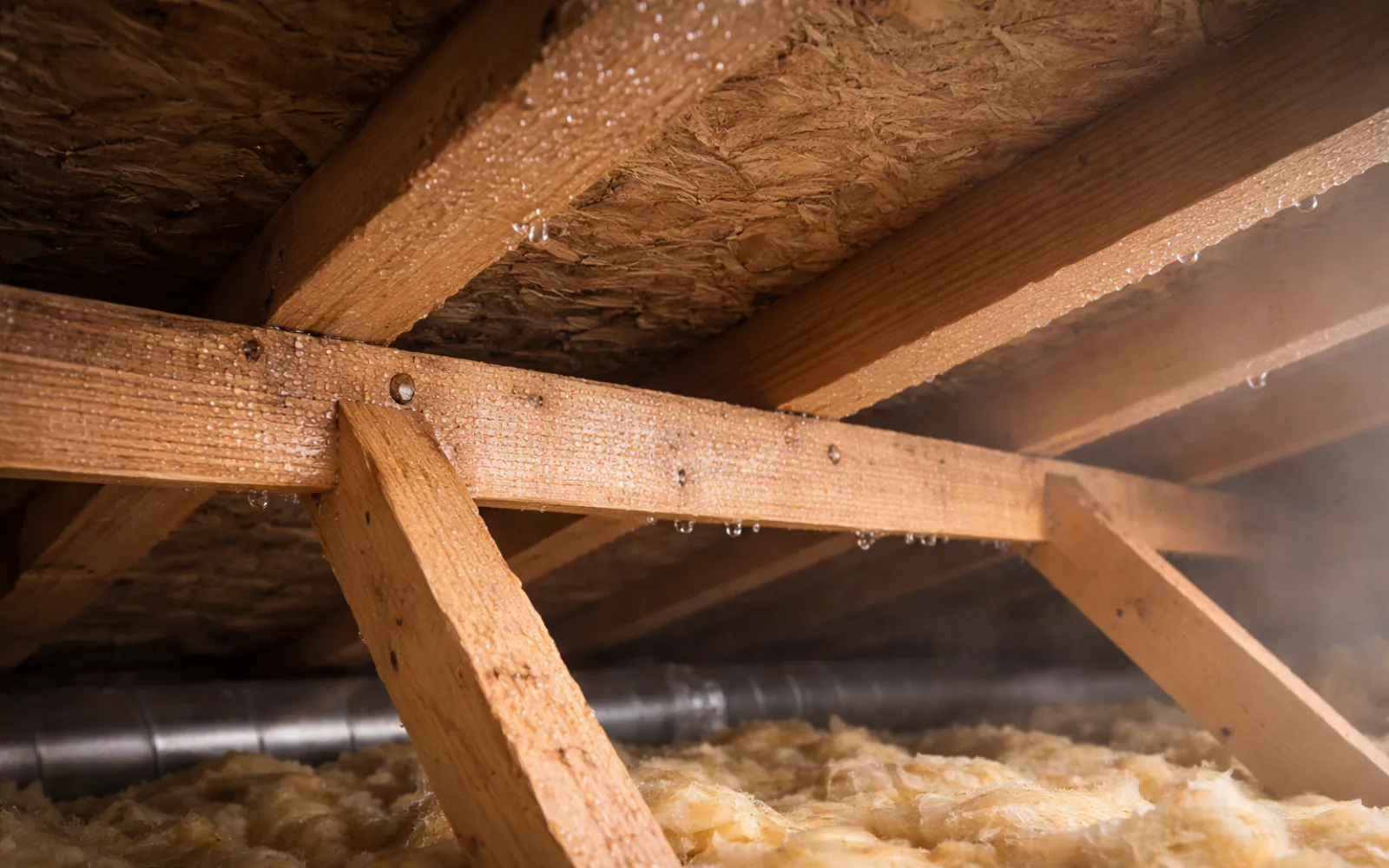
- Roof leaks that show up in attic sheathing before the ceiling stains
- Crawl space humidity
- HVAC condensation or contamination
- Damp insulation
- Water under flooring
- Poor ventilation in bathrooms or attics
- Past water damage that wasn’t fully dried
Visual inspection has limits
One of the most important things to understand is this: clean-looking walls don’t always mean clean wall cavities.
A wall can look perfectly normal on the room-facing side while moisture or mold is present behind it. That doesn’t mean every wall needs to be opened. It means a good inspection should follow clues before anything gets disturbed.
If you’re seeing subtle signs like damp odors, unexplained staining, or changes around plumbing areas, it’s worth learning more about the signs of hidden mold in walls, ceilings, and floors.
If something feels off but you can’t see the source, schedule a professional mold inspection before opening walls or disturbing materials.
The Most Common Places Hidden Mold Shows Up in Lexington Homes
Hidden mold doesn’t show up randomly. In Lexington-area homes, certain spaces tend to be more vulnerable because of humidity, crawl spaces, basements, rooflines, plumbing, and how HVAC systems are installed.
Caleb’s inspection process usually starts with the spaces that give him the most useful information first.
“Particularly in Kentucky, we tend to put our HVAC systems in crawl spaces, which can lead to a lot of issues of a client starting to feel sick in their home but not being able to see anything.”
Caleb Jones
That matters because hidden mold in your home isn’t always isolated to the room where you notice the smell or symptoms. Air moves. Moisture moves. Dust moves. Spores can move too.
1. Crawl spaces
Crawl spaces are one of the biggest hidden mold trouble spots in Kentucky homes. They’re often damp, poorly maintained, and easy to forget about.
A crawl space may have missing or damaged vapor barriers, standing moisture, high humidity, insulation issues, exposed soil, foundation seepage, or HVAC equipment running through it. When those conditions sit long enough, mold can begin growing on joists, subflooring, insulation, ducts, or stored materials.
And because many homeowners don’t enter their crawl space regularly, the problem can grow quietly.
2. Attics
Attics can hide mold from roof leaks, poor ventilation, bathroom exhaust fans venting incorrectly, pest activity, or insulation problems.
You may never notice a small roof leak from the living space below. But in the attic, moisture can stain the underside of the roof decking or affect insulation long before a ceiling stain appears.
Caleb mentioned that attics are similar to crawl spaces in this way. Roof leaks, bad insulation, and animals can all create conditions that homeowners may not see from inside the home.
3. HVAC systems and filters
HVAC systems deserve special attention because they move air throughout the home.
During one inspection, Caleb removed a client’s HVAC filter and found it covered in mold. The homeowner had recently put that filter in, which made the discovery even more concerning.
“HVAC systems are very common places for mold to start.”
Caleb Jones
That doesn’t mean every HVAC smell is mold. But if hidden mold is affecting an HVAC system, ductwork, coils, filters, or crawl space air pathways, the issue may feel more widespread than a single room problem.
For a deeper look at this topic, read mold in air ducts: signs, risks, and when to get help.
4. Unfinished basements
Unfinished basements can have moisture from foundation seepage, condensation, plumbing leaks, sump pump problems, or poor humidity control. Since basements are naturally below grade, they’re more vulnerable to dampness.
Musty smells in a basement shouldn’t be ignored, especially if the odor travels upstairs or worsens after rain.
5. Plumbing areas
Slow plumbing leaks can create hidden mold long before there’s standing water.
Caleb checks toilets, sinks, washing machines, water heaters, and other fixtures because water can travel under flooring or behind cabinetry without leaving an obvious puddle.
Watch for warped flooring, swelling cabinet bottoms, soft drywall, bubbling paint, loose baseboards, or staining near water sources.
6. Behind mirrors, cabinets, and showers
Bathrooms are high-moisture rooms. Mold can hide behind vanities, mirrors, shower surrounds, tile assemblies, and drywall cavities.
In one interview example, Caleb described a homeowner who removed a mirror in the master bathroom and found the drywall behind it was completely molded. Water had been entering through the exterior, and the visible evidence was limited until the mirror came down.
7. Bedrooms
Bedrooms matter because people spend hours sleeping in them. A bedroom may not contain the original moisture source, but HVAC pathways, crawl space air movement, wall cavities, and nearby bathrooms can all affect the room.
If symptoms seem worse at night or first thing in the morning, read bedroom mold growth: why symptoms can feel worse at night.
If your crawl space, attic, basement, or HVAC system hasn’t been checked in a while, Spotless can inspect the areas most homeowners never see.
Signs and Smells That May Point to Hidden Mold
Hidden mold in your home doesn’t always appear as a dramatic black patch on the wall. Sometimes the clues are quieter.
You may notice a smell first. You may see a faint stain. You may notice flooring that doesn’t sit right anymore. Or you may realize that one area of the house always feels damp, stuffy, or irritating.
Caleb gives homeowners a simple way to start thinking about visible clues:
“I tell people that my job is a fancy way of looking for circles and dots.”
Caleb Jones
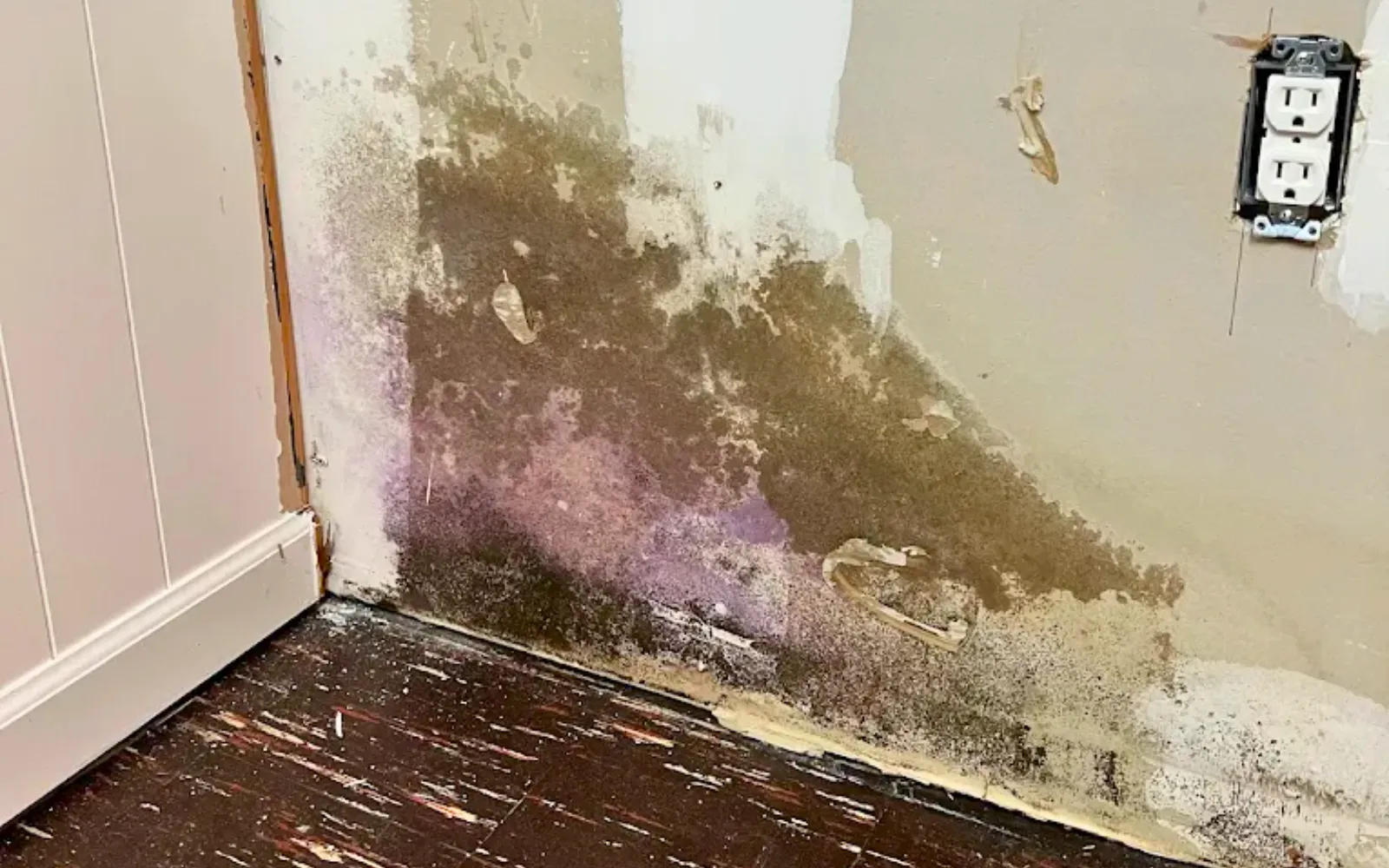
He’s quick to admit that’s an oversimplification, but it helps homeowners understand what they’re scanning for. Mold often appears in spotting, speckling, circular growth patterns, or unusual discoloration.
It’s also not always black.
“Mold is not always three-dimensional, but it can be any range of colors from white to brown to green to yellow.”
Caleb Jones
Caleb has even seen purple mold in basements. So color alone doesn’t tell you what type of mold you’re dealing with or how serious the issue is. But unusual color where it doesn’t belong is worth checking.
Watch for these hidden mold clues
Here are some of the signs that may point to a hidden mold or moisture issue:
- A persistent musty smell
- Damp, earthy, or stale odors that return after cleaning
- Staining on ceilings, walls, baseboards, or cabinet interiors
- Warped flooring near sinks, toilets, water heaters, or washing machines
- Bubbling paint or peeling wallpaper
- Condensation on windows, pipes, or walls
- A moldy HVAC filter
- Rooms that feel humid or stuffy
- Past roof leaks, plumbing leaks, or flooding
- Symptoms that seem worse indoors or in certain rooms
The World Health Organization reported that occupants of damp or moldy buildings may have up to a 75% greater risk of respiratory symptoms and asthma (Source: WHO indoor air quality guidelines on dampness and mold), so paying attention to small clues is important.
That doesn’t mean mold is the cause of every symptom though. Spotless doesn’t diagnose medical conditions, and anyone dealing with ongoing symptoms should speak with a qualified medical professional. But from a home-environment standpoint, dampness and mold deserve to be taken seriously.
What does hidden mold smell like?
People often describe mold-related odors as musty, damp, earthy, stale, or similar to wet cardboard. Sometimes the smell is strongest when the HVAC turns on, after rain, when a room has been closed up, or when you open a cabinet, closet, basement door, or crawl space access.
For more detail, read what black mold smells like.
Not every odor is mold
This part matters too. Some odors can be mistaken for mold smell, including damp building materials, bacteria, pests, sewer gas, dirty HVAC components, old carpet, VOCs, or moisture trapped in contents.
That’s why guessing can be frustrating. You might clean, deodorize, replace filters, or run air fresheners, but the smell keeps coming back because the source hasn’t been found.
For a deeper breakdown, see what can be mistaken for mold smell.
If you’re noticing musty smells, staining, or symptoms that seem worse at home, don’t guess. A mold inspection can help identify whether hidden mold is part of the problem.
How Professionals Inspect for Hidden Mold
A good hidden mold inspection isn’t just someone walking around, glancing at the walls, and giving you a price.
It should be a careful process that looks for moisture, air movement, visible clues, high-risk areas, and testing opportunities when needed. At Spotless, Caleb wants homeowners involved in the process because he knows mold inspections can feel intimidating.
“I want my clients to be as much of a part of the inspection as possible because I think there’s a lack of transparency in my industry.”
Caleb Jones
That transparency matters. Mold remediation can be stressful, especially when you’re worried about your health or your family’s safety. The last thing you need is someone making the process feel mysterious.
Visual inspection and hard-to-reach spaces
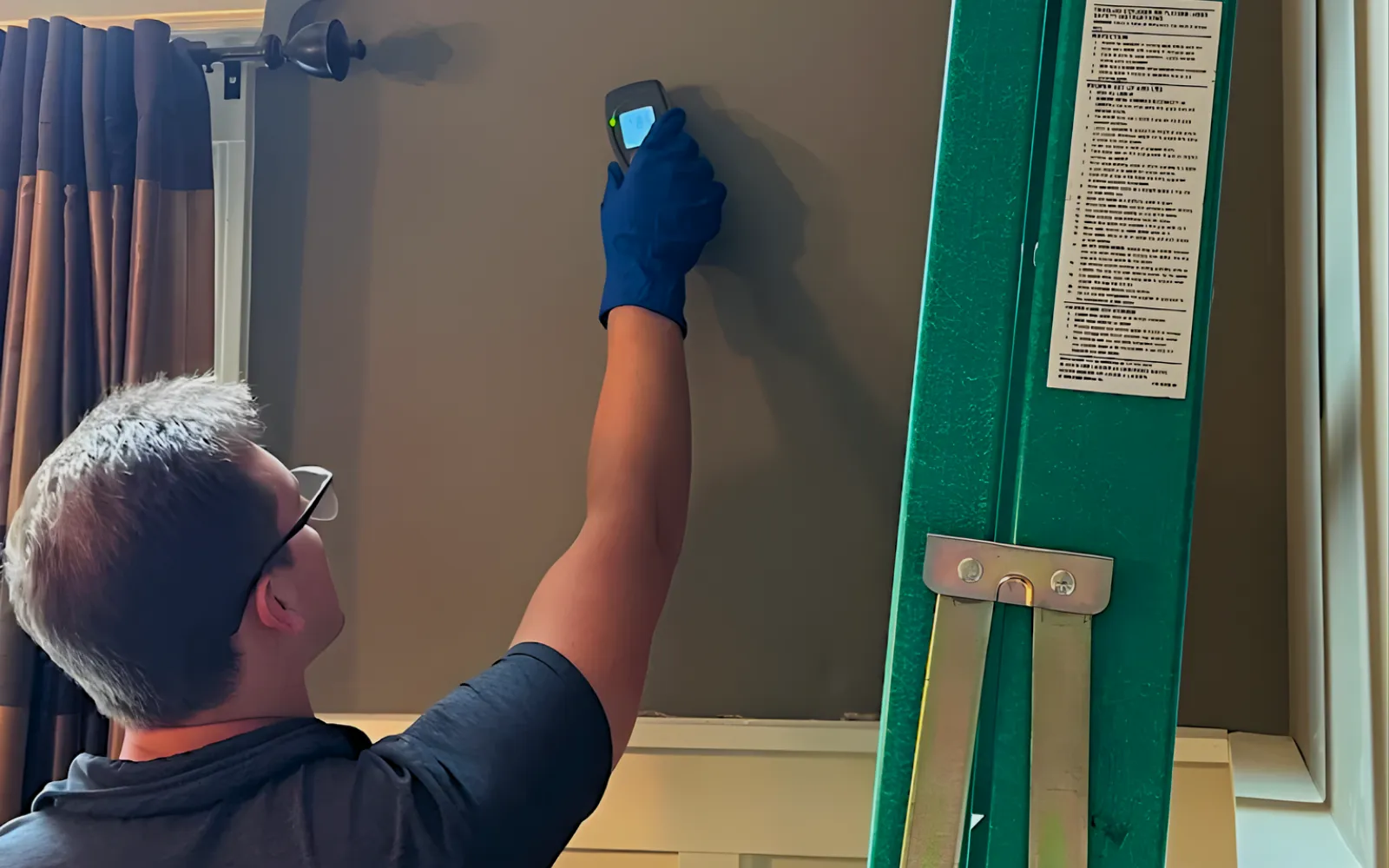
Caleb’s inspection kit starts with simple but important tools: a headlamp, flashlight, protective gear, hand tools, and the ability to access areas most homeowners don’t usually inspect.
He looks in crawl spaces, attics, unfinished basements, HVAC systems, closets, corners, plumbing areas, and other nooks where moisture problems may hide.
Lighting matters because mold and water staining can be subtle. So does access. If an inspector can’t safely see an area, they should explain that limitation instead of pretending they’ve ruled it out. And the inspector should have personal physical capabilities to get into hard-to-access areas (which is why Caleb keeps himself in good shape!)
Moisture meters and humidity readings
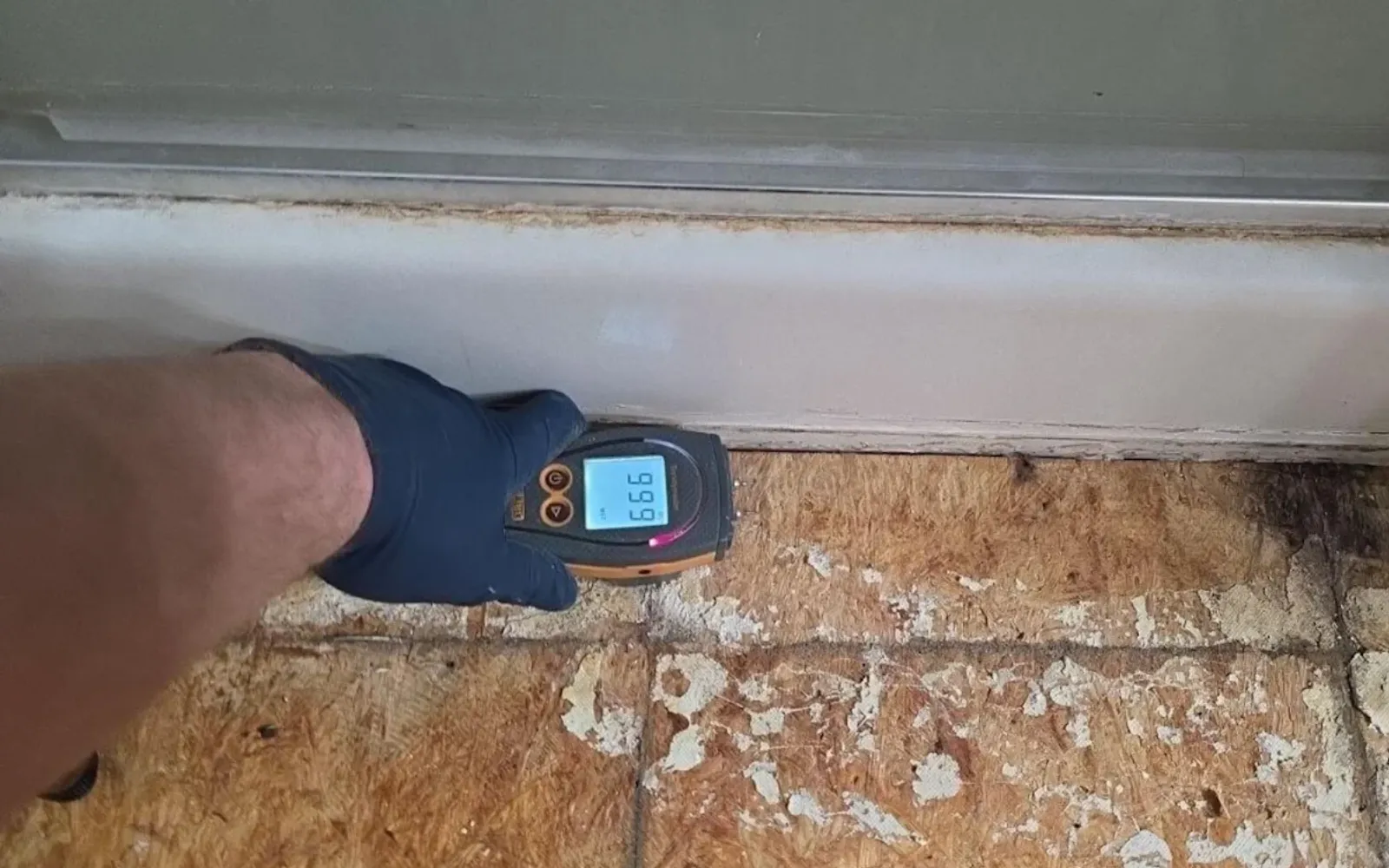
A moisture meter can help identify whether materials are holding moisture even when they don’t feel wet to the touch.
Caleb uses moisture tools around plumbing fixtures, flooring, water heaters, washing machines, and other leak-prone areas. A wall or floor can look dry from the outside while moisture is sitting behind or beneath the surface.
He also uses humidity tools to understand whether a space is creating conditions that allow mold to grow.
Anything above roughly 50% to 55% humidity can create an environment where mold may begin to grow. That lines up with the broader principle that controlling moisture is the key to mold control.
Borescope inspection
For HVAC systems and some hard-to-see areas, Caleb uses a borescope: a small camera on a flexible wire that can pivot into tight spaces.
This can help him inspect inside HVAC equipment, behind panels, and in areas where a normal visual inspection can’t reach.
It’s not magic and it doesn’t see through walls, but it can be incredibly useful when the issue is inside a system, cabinet, or accessible cavity.
Swabs, air samples, and on-site air quality tools
Testing can be helpful when visual evidence isn’t clear or when a homeowner wants third-party lab confirmation.
Caleb may use swab testing for suspicious surfaces or air captures inside and outside the home. Air samples can help compare indoor and outdoor conditions and identify the types of mold present when sent to a lab.
Spotless also has access to an Instascope, which Caleb described as a “little lab in a box.” It can perform on-site air quality scans and measure mold-related particles, bacteria load, pollen load, and VOCs. It doesn’t identify the exact type of mold, but it can help generate useful on-site information without waiting for lab turnaround.
For a deeper explanation, read how to air test for mold in your home.
The EPA also notes that wet or damp materials should be dried quickly, typically within 24–48 hours, to help avoid mold growth. Source: EPA.
That’s one reason hidden water damage matters. If materials stayed wet longer than they should have, a mold inspection may be the next reasonable step.
If you’re comparing testing options, you may also want to learn about ERMI mold testing and when it does or doesn’t make sense.
For local help, Spotless provides mold inspections in Lexington KY for homeowners who need a clearer answer before remediation.
When you call Spotless, you’re not just getting someone to glance around the house. You’re getting a guided inspection designed to narrow down the moisture source and next step.
When Mold Testing, an Industrial Hygienist, or Mold Dog Network Makes Sense
There isn’t one perfect mold test for every situation. That’s one of the most honest things a homeowner can hear.
A visual inspection can find a lot. Moisture meters can find moisture patterns. Air testing can provide useful data. Swabs can confirm suspicious growth. Industrial hygienists can provide impartial third-party assessment. Canine mold detection can help identify hidden mold in cavities.
But each option has limits.
“I can only access what I can access. I can only tell what the tools are gonna tell me.”
Caleb Jones
That kind of honesty is important. Nobody should promise they can see through every wall with a flashlight and a moisture meter.
When standard inspection may be enough
A standard mold inspection may be the right first step if you have:
- A musty smell
- Visible staining
- Past water damage
- Crawl space or attic concerns
- A suspicious HVAC filter
- Warped flooring near plumbing
- A room that feels unusually humid
In many cases, an experienced inspector can identify likely moisture sources, determine whether testing is needed, and explain what should happen next.
When lab testing may help
Lab testing may make sense when:
- You’re unsure whether a substance is mold
- You need to know what type of mold is present
- You want indoor/outdoor air comparisons
- You’re working with a medical professional who wants environmental information
- You need documentation before remediation
Air testing can be especially useful when hidden mold in your home may be affecting indoor air quality, but there isn’t obvious visible growth.
When an industrial hygienist may be appropriate
Caleb described industrial hygienists as impartial third-party inspection professionals who can evaluate a home for water and mold intrusion issues.
They’re often helpful on complex projects, insurance situations, real estate concerns, or cases where a written protocol is needed before remediation.
Industrial hygienists may also be useful when water intrusion is complicated and you need a deeper building-science evaluation before remediation begins.
When Mold Dog Network may be the right next step
Sometimes the strongest concern is hidden mold inside cavities: behind a cabinet, behind a shower, in a drywall cavity, behind a mirror, or in areas that don’t show surface damage.
That’s where canine mold detection can help reduce guesswork.
Caleb explained that canine inspection teams work in a similar way to bomb or drug dog teams. The dog alerts to areas of concern, the handler marks those areas, and then the remediation team can evaluate what needs to happen in each location.
“From a perspective of a mold inspector, it makes my life so much easier because then I can go in and identify like, okay, these are all the areas of concern.”
Caleb Jones
This can be especially useful when a home has had multiple water issues, builder defects, or prior inspections that didn’t fully explain what’s happening.
Spotless’ sister company, Mold Dog Network, helps identify hidden mold so remediation can be more targeted and less dependent on guesswork.
If the signs point to a hidden cavity issue, ask Spotless whether standard inspection, lab testing, an industrial hygienist, or Mold Dog Network is the right next step.
What to Do Next If You Suspect Hidden Mold
If you suspect hidden mold in your home, the worst next step is usually panic.
The second-worst next step is tearing into materials without a plan.
When drywall, flooring, insulation, cabinets, or HVAC components are disturbed without containment, contamination can spread. That doesn’t mean you should ignore the problem. It means the next step should be controlled, thoughtful, and based on evidence.
Here’s a practical path.
1. Don’t start demolition
Don’t cut open walls, rip out baseboards, pull up flooring, or remove moldy materials without understanding the risk. If mold is present, disturbing it can release particles into the air and spread contamination into cleaner areas.
Controlled remediation matters because the goal isn’t just to remove what you can see. It’s to prevent cross-contamination while addressing the source.
2. Document what you’re noticing
Take photos of stains, warped flooring, visible growth, damaged materials, or areas where odor seems strongest.
Make notes about when the smell appears. Is it worse after rain? When the HVAC turns on? In the morning? In one bedroom? Near a bathroom? Around the crawl space access?
These details can help an inspector narrow down where to look first.
3. Check obvious moisture sources safely
Without disturbing materials, look at common moisture areas:
- Under sinks
- Around toilets
- Around the water heater
- Near the washing machine
- Around windows
- Near exterior doors
- Around attic access
- Around basement walls
- Near HVAC equipment or filters
You’re not trying to solve the whole problem yourself. You’re gathering clues.
4. Pay attention to room-by-room patterns
Hidden mold in your home may affect one room more than another.
Maybe the smell is worse in the bedroom. Maybe a child’s room feels damp. Maybe the basement odor travels upstairs. Maybe one side of the house feels different after rain.
Patterns matter.
5. Schedule a professional inspection
A professional inspection helps connect the dots between moisture, structure, air movement, testing, and remediation needs.
“I try to approach the project from a standpoint of, ‘Do it correctly the first time and make sure you’re covering all your bases.’”
Caleb Jones
That’s the difference between surface-level cleanup and a real plan.
6. If mold is confirmed, fix the source before finishing repairs
Mold remediation should never be just a cosmetic cleanup. If the water source remains, the problem can come back.
That may mean repairing a roof leak, correcting a plumbing problem, drying wet materials, improving crawl space humidity control, addressing HVAC contamination, or removing affected materials under containment.
Spotless provides health-focused mold remediation in Lexington KY for homeowners who need more than a wipe-down. The goal is to identify the root cause, control contamination, remove or treat affected materials properly, and help restore healthier indoor air.
If the problem started with a leak or flooding, water damage restoration in Lexington may also be part of preventing mold from becoming a larger issue.
Ready to stop guessing? Call Spotless to schedule a hidden mold inspection and get a clear plan for what happens next.
Why Spotless Takes Hidden Mold Personally
For some homeowners, hidden mold is a property problem.
For others, it’s deeply personal.
It’s the feeling that your home no longer feels safe. It’s wondering whether your symptoms are connected to your environment. It’s being tired of vague answers, quick fixes, or contractors who only care about what’s visible.
Caleb understands that mold inspections can feel emotional because he’s seen how much is on the line for families.
“It’s an emotional thing whenever your safe space in this world is not feeling safe anymore.”
Caleb Jones
That’s why Spotless takes an educational, transparent approach. The goal isn’t to use fear tactics. It’s to help homeowners understand what’s happening, what the inspection can and can’t prove, and what options make sense.
“This is a very easy industry to use fear tactics and stuff in. I try to avoid doing that.”
Caleb Jones
Spotless is a locally owned, IICRC-certified company with more than 30 years of experience serving Lexington and Central Kentucky. The team specializes in mold remediation, mold inspection, indoor air quality, water damage restoration, moisture detection, and health-focused remediation for homeowners who are worried their indoor environment may be affecting how they feel.
We get it. When you’re dealing with musty smells, hidden moisture, or unexplained concerns in your home, you don’t need someone to rush you into a decision. You need someone who can slow the process down, investigate carefully, and explain the next step clearly.
If your home no longer feels like a safe place, Spotless can help you investigate the source and move toward a healthier indoor environment.
Final Thoughts: Don’t Ignore the Clues Your Home Is Giving You
Hidden mold in your home can be confusing because the signs are often indirect.
You may not see growth on the wall. You may not know whether the smell is mold. You may not know whether symptoms are connected to your home. You may not know whether you need air testing, swab testing, Mold Dog Network, an industrial hygienist, or full remediation.
That uncertainty is exactly why a thoughtful inspection matters.
The most useful clues are moisture, odors, HVAC issues, crawl space or attic conditions, past water damage, warped materials, and patterns that repeat. The goal is to identify where the issue may be coming from before materials are disturbed or the problem spreads.
And if mold is found, the next step should be controlled remediation that addresses the source, protects the rest of the home, and reduces the chance of the problem coming back.
If you’re worried about hidden mold, you don’t have to keep guessing.
Call Spotless today to schedule a mold inspection in Lexington KY and get a clear, calm plan for what to do next.
Spotless is the most trusted name in restoration in central Kentucky including Lexington, Nicholasville and surrounding communities.
Specializing in health-focused mold remediation and water damage restoration, we leave mold-affected clients with a healthier home.
Call 859-459-0424 and speak to a technician today!