
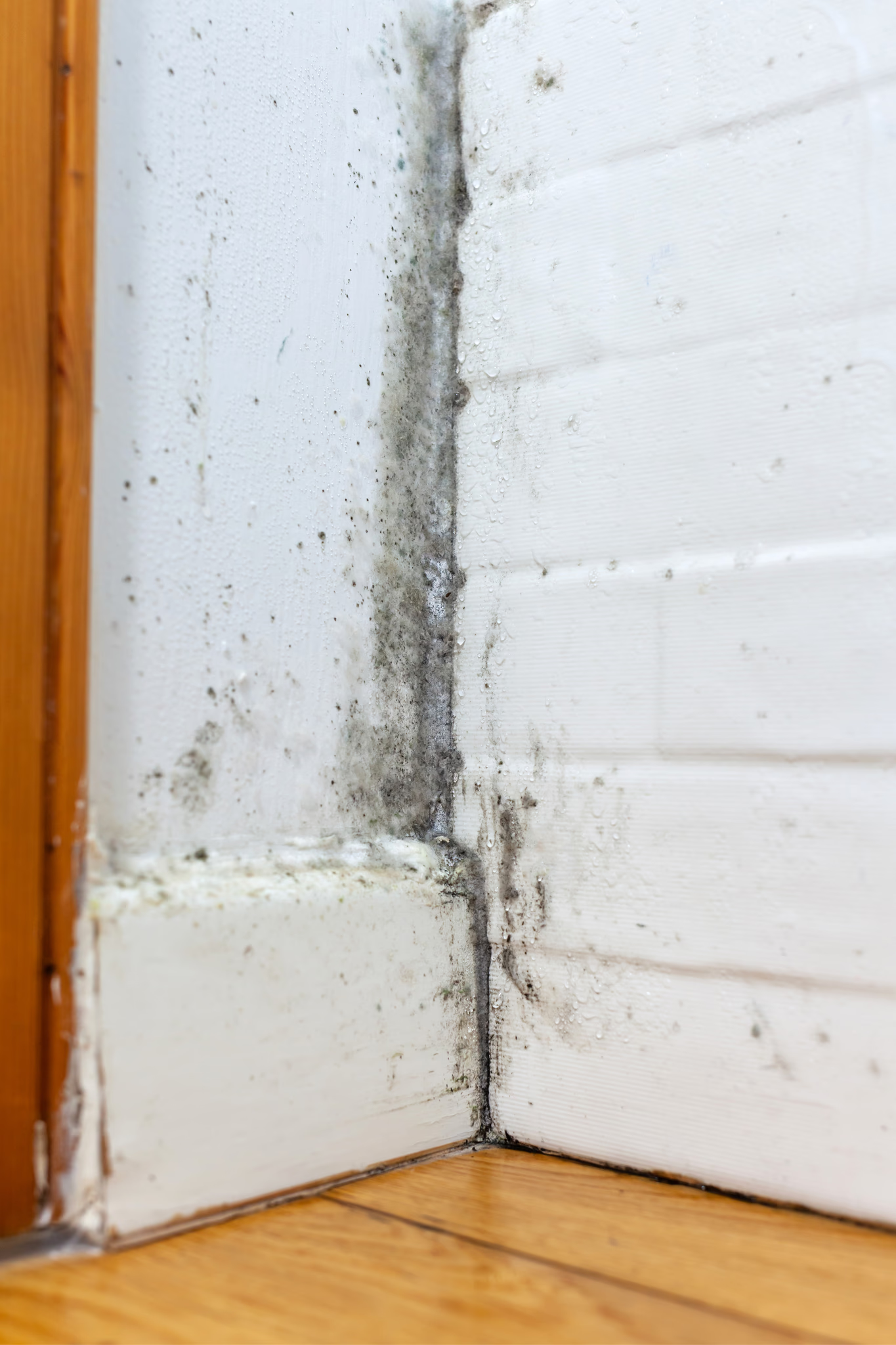
What Does Dormant Mold Look Like?
Dormant mold can be confusing because it doesn’t always look like the fuzzy, active mold homeowners expect.
Sometimes it looks dry. Sometimes it looks powdery. Sometimes it looks like old staining, shadowing, speckling, or discoloration that’s been there for months. And if it doesn’t look wet or fuzzy anymore, it’s easy to wonder: Is this still a problem, or is it just old damage?
Caleb Jones, Lead Inspector at Spotless, spends a lot of time helping homeowners make sense of suspicious mold-like patterns inside walls, ceilings, attics, crawl spaces, basements, and HVAC-adjacent areas.
“I tell people that my job is a fancy way of looking for circles and dots.”
Caleb Jones
That’s a simple way of saying mold often has patterns. But appearance alone doesn’t tell the whole story. This guide explains what dormant mold can look like, why dry-looking mold still deserves attention, and when to schedule a professional inspection.
What Is Dormant Mold?
Dormant mold is mold growth that may not be actively spreading at the moment because the moisture source has changed, dried out, or been reduced.
But “dormant” doesn’t automatically mean harmless, gone, or solved.
Mold is usually tied to moisture. If the moisture went away, the mold may stop actively growing. If the moisture comes back, growth may continue again. And even if the mold appears dry or inactive, it may still indicate that water entered the material at some point.
“Most of mold issues and stuff can be tied back to humidity or water issues.”
Caleb Jones
That’s why dormant mold should be treated as a clue. It may point to a roof leak, old plumbing issue, crawl space humidity, HVAC condensation, basement moisture, or past water damage that wasn’t fully handled.
The EPA notes that dead mold may still cause allergic reactions in some people, so simply killing mold isn’t enough; it should also be removed. Source: EPA, A Brief Guide to Mold, Moisture and Your Home.
If you’ve found dry-looking mold, don’t assume the issue is over. A mold inspection can help determine whether moisture is still present.
For a broader overview, read our guide to hidden mold in your home.
What Does Dormant Mold Look Like?
Dormant mold may look less dramatic than active mold. It may not look wet, fuzzy, or raised. In many cases, it looks more like staining or residue than a living growth.
Dormant or old-looking mold may appear:
- Dry or dusty
- Powdery
- Flat rather than fuzzy
- Speckled, dotted, or circular
- Shadow-like or stained
- Crusty or patchy
- White, gray, brown, green, yellow, or black
- Similar to old water staining with irregular spots
Caleb makes an important point about mold appearance:
“Mold is not always three-dimensional, but it can be any range of colors from white to brown to green to yellow.”
Caleb Jones
That means color alone isn’t reliable. Black staining doesn’t automatically mean “toxic black mold,” and white or gray growth doesn’t mean it’s safe to ignore. Mold can appear in many colors, textures, and patterns depending on the material, moisture history, species, and environmental conditions.
You may see dormant mold on drywall, baseboards, attic sheathing, crawl space joists, subflooring, basement walls, insulation-facing materials, bathroom ceilings, or areas near HVAC components.
The tricky part is that old mold, dormant mold, active mold, water staining, dust, soot, and dirt can sometimes look similar to a homeowner. That’s why Spotless doesn’t judge the whole situation by appearance alone.
If you’re seeing unusual spotting, staining, or powdery growth, Spotless can inspect it before you disturb the material.
For related visual clues, read signs of hidden mold in walls, ceilings, and floors.
Dormant Mold vs Active Mold: What’s the Difference?
The biggest difference between dormant mold and active mold is moisture.
Active mold usually has an ongoing moisture source. Dormant mold may look dry because the conditions that allowed it to grow have changed. But you can’t reliably confirm that by looking at it from across the room.
Here’s a simple way to think about the difference:
| Clue | More likely active | More likely dormant or old |
| Surface feels damp | Yes | Less likely |
| Odor is strong or recent | Often | Sometimes |
| Growth looks fuzzy or spreading | Often | Less likely |
| Area is dry but stained | Sometimes | Often |
| Moisture source is still present | Yes | Needs investigation |
The problem is that mold doesn’t always follow a neat checklist. A dry surface can still have moisture behind it. A stain can look old while a leak is still active. A wall can look normal while the back side is affected.
Caleb is honest about the limits of inspection tools and visual access.
“I can only access what I can access. I can only tell what the tools are gonna tell me.”
Caleb Jones
That’s why moisture readings, humidity checks, testing, and inspection history matter. If there’s a musty smell, recurring dampness, or staining near a known water source, don’t assume the mold is inactive just because it looks dry.
Before assuming mold is inactive, let an inspector check whether the surrounding material is still wet or vulnerable.
If odor is part of the concern, read what black mold smells like.
Where Dormant Mold Is Often Found
Dormant mold is often found in places where moisture was present before, especially if the area dried out before anyone discovered the growth.
Caleb usually starts inspections in overlooked areas because those spaces often reveal what’s happening behind the living space.
“I usually start with areas that are accessible that the homeowner doesn’t usually go into, which would be a crawl space, an attic, an unfinished basement.”
Caleb Jones
In Lexington and Central Kentucky homes, dormant or old-looking mold may be found in:
- Attic sheathing after roof leaks
- Crawl space joists or subflooring
- Basement walls
- Behind baseboards
- Under sinks
- Around old water heater leaks
- Bathroom ceilings or walls
- Around windows with condensation
- Behind mirrors, cabinets, or vanities
- HVAC filters, coils, ducts, or nearby materials
Crawl spaces and attics are especially important because homeowners often don’t check them regularly. A roof leak may affect attic sheathing long before you see a ceiling stain. Crawl space humidity may affect joists or subflooring long before you notice a problem in the room above.
HVAC areas matter too. If mold is present around air-moving equipment, filters, or ductwork, it can raise bigger indoor air quality questions.
If old-looking mold is in an attic, crawl space, basement, or HVAC area, schedule an inspection before assuming it’s harmless.
For related HVAC concerns, read mold in air ducts.
Is Dormant Mold Still Dangerous?
Dormant mold shouldn’t be used to create panic, but it also shouldn’t be brushed off.
At Spotless, we try to keep this conversation grounded. Mold affects people differently. Some homeowners may notice no symptoms. Others may be more sensitive, especially if they already have respiratory issues, allergies, immune concerns, or a history of mold sensitivity. Spotless can inspect and remediate the home environment, but anyone dealing with ongoing symptoms should also speak with a qualified medical professional.
Caleb is careful not to use fear as a sales tactic.
“This is a very easy industry to use fear tactics and stuff in. I try to avoid doing that.”
Caleb Jones
That’s the right approach. The concern with dormant mold is not that every dry stain is an emergency. The concern is that it may still represent contamination, a moisture history, or a condition that could return if humidity or leaks come back.
Dead or inactive-looking mold can also still be an indoor air quality concern for some sensitive people. This is why spraying mold with bleach or sealing it behind paint is not the same as proper remediation.
The goal is to understand what you’re looking at, whether moisture is still present, whether the material can be cleaned, and whether removal is needed.
If anyone in your home is mold-sensitive or concerned about indoor air quality, don’t leave old mold growth untreated or unexplained.
For help with indoor air quality concerns after mold, Spotless can help evaluate the home environment and next steps.
How Spotless Inspects Dry or Old-Looking Mold
Spotless doesn’t decide whether mold matters based on appearance alone.
A dry-looking stain may be old. It may be dormant mold. It may be active moisture hiding behind the material. Or it may be part of a larger hidden issue that needs more investigation.
During an inspection, Caleb may look at:
- The pattern, color, texture, and location of the suspicious material.
- Nearby moisture sources such as plumbing, rooflines, HVAC equipment, or crawl space conditions.
- Moisture readings in surrounding materials.
- Humidity levels in the room or hidden space.
- Adjacent areas like attics, crawl spaces, unfinished basements, or HVAC components.
- Whether swab testing or air testing is appropriate.
- Whether advanced hidden mold detection may be useful.
Just as importantly, Caleb wants homeowners to understand what he’s seeing.
“I want my clients to be as much of a part of the inspection as possible because I think there’s a lack of transparency in my industry.”
Caleb Jones
We get it. If you’ve found something suspicious in your home, you don’t want vague answers or scare tactics. You want someone to slow down, explain the findings, and tell you what actually makes sense.
If visible evidence is limited but concern is high, advanced hidden mold detection through Mold Dog Network may help identify areas that need further evaluation.
A professional inspection helps you understand whether the material is old staining, dormant mold, active moisture, or part of a larger hidden problem.
To schedule local help, learn more about mold inspection in Lexington KY.
What to Do If You Find Dormant Mold
If you find dry, powdery, old-looking, or suspicious mold-like growth, don’t disturb it casually.
Avoid scraping, sanding, vacuuming, spraying, or painting over it. Those shortcuts can disturb particles, spread contamination, or hide a moisture problem without actually solving it.
Here’s a safer plan:
- Take photos of the area.
- Note whether there’s a musty smell nearby.
- Look for moisture clues such as staining, warping, bubbling paint, or damp materials.
- Check safe nearby areas like under sinks, around toilets, near the water heater, or below attic access.
- Don’t open walls or remove materials without containment.
- Schedule a professional inspection.
- If mold is confirmed, move into controlled remediation rather than surface coverups.
Caleb’s philosophy is simple: handle the issue properly from the start.
“I try to approach the project from a standpoint of do it correctly the first time and make sure you’re covering all your bases.”
Caleb Jones
That’s especially important with dormant mold because the visible growth may only be part of the story. If the moisture source isn’t found and corrected, the problem can come back.
Spotless provides health-focused mold remediation in Lexington KY for homeowners who want the issue handled thoroughly, with attention to the source, containment, indoor air quality, and cross-contamination control.
If you’ve found dry, old, or powdery mold growth, call Spotless before disturbing it or covering it up.
Final Thoughts
Dormant mold may look dry, powdery, stained, flat, speckled, or shadow-like. It may not look fuzzy or wet. It may even look like an old stain.
But appearance alone can’t confirm whether mold is active, dormant, dead, or harmless.
The safest next step is to understand whether moisture is still present, whether the material is affected, and whether remediation is needed.
“Yes, we can fix this. There’s a light at the end of the tunnel.”
Caleb Jones
Spotless is a locally owned, IICRC-certified mold remediation and water damage restoration company serving Lexington and Central Kentucky. With more than 30 years of experience, our team helps homeowners investigate mold concerns, identify moisture sources, and move forward with a clear plan.
If you’ve found suspicious dry-looking mold, you don’t have to keep guessing. Call Spotless to schedule a professional mold inspection.
Spotless is the most trusted name in restoration in central Kentucky including Lexington, Nicholasville and surrounding communities.
Specializing in health-focused mold remediation and water damage restoration, we leave mold-affected clients with a healthier home.
Call 859-459-0424 and speak to a technician today!