
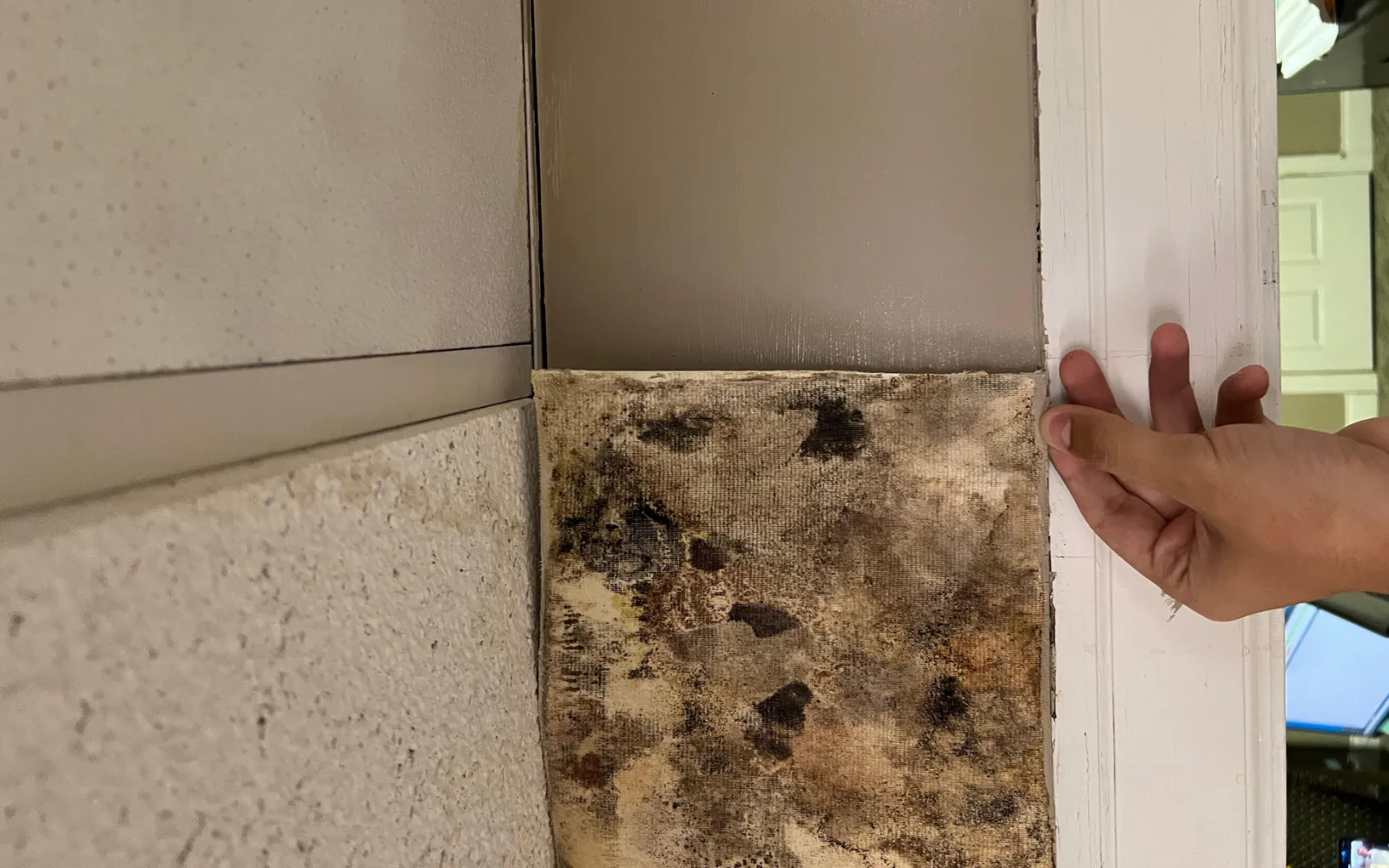
Signs of Hidden Mold in Walls, Ceilings, and Floors
Hidden mold doesn’t always show up as an obvious black patch on drywall. Sometimes the first clue is a musty smell that keeps coming back. Sometimes it’s a ceiling stain, warped flooring, soft drywall, or a room that just feels damp no matter what you do.
And sometimes, there’s no clear sign at all — just a gut feeling that something in your home isn’t right.
That’s when a careful inspection matters. Caleb Jones, Lead Inspector at Spotless, often hears from homeowners who suspect mold but don’t have visible growth to point to.
“Whenever a client reaches out to me and they don’t have a very specific problem, they just have kind of suspicions of the home.”
Caleb Jones
This guide explains the most common signs of hidden mold in walls, ceilings, and floors, what those signs may mean, and when it’s time to schedule a professional inspection instead of guessing.
Why Hidden Mold Often Starts with Moisture
Most mold problems begin the same way: moisture gets where it shouldn’t be, and it stays there long enough for mold to grow.
That moisture might come from a roof leak, plumbing leak, crawl space humidity, HVAC condensation, water under flooring, or a past water damage issue that wasn’t dried properly. In Lexington-area homes, crawl spaces, attics, basements, and older plumbing areas can all create the right conditions for hidden mold.
“Most of mold issues and stuff can be tied back to humidity or water issues.”
Caleb Jones
That’s why the signs of hidden mold in walls often show up as moisture clues before they show up as visible growth. You may see paint bubbling, drywall softening, baseboards separating, or flooring beginning to cup near a sink, toilet, washing machine, or water heater.
The EPA recommends keeping indoor humidity below 60%, ideally between 30% and 50%, to help control mold growth. Source: EPA, A Brief Guide to Mold, Moisture and Your Home.
Common moisture sources behind hidden mold include:
- Slow plumbing leaks
- Roof leaks into attic spaces
- Crawl space humidity
- Condensation around HVAC systems
- Water trapped under flooring
- Poor bathroom ventilation
- Past leaks that weren’t fully dried
If you want a broader look at how hidden mold develops, read our guide to hidden mold in your home.
If you’ve had a leak, humidity issue, or water damage that never felt fully resolved, schedule a mold inspection before the problem spreads.
Signs of Hidden Mold in Walls
Walls can hide a surprising amount of damage before anything looks serious from the room side. That’s what makes hidden mold in walls so frustrating. The surface may look mostly normal while moisture is active behind the drywall.
Caleb gives homeowners a simple way to think about visual clues:
“Visible mold, I tell people that my job is a fancy way of looking for circles and dots.”
Caleb Jones
That’s an oversimplification, of course, but it’s helpful. Mold often shows up in speckled, dotted, circular, or patchy patterns. It can also appear in different colors, not just black.
Discoloration, staining, or strange spotting
Watch for brown, yellow, green, gray, white, or dark staining that doesn’t seem to belong. Mold can be flat, fuzzy, powdery, or spotty. Any unusual color change near a moisture source is worth checking.
Bubbling paint, peeling wallpaper, or soft drywall
Paint doesn’t usually bubble for no reason. Wallpaper doesn’t usually peel from a dry, healthy wall. If drywall feels soft, swollen, or crumbly, that may point to moisture behind the surface.
Musty smells near a wall or corner
A musty smell doesn’t prove there’s mold behind the wall, but it’s a useful clue when it happens alongside staining, dampness, or previous leaks. If the smell returns after cleaning, the source may be hidden deeper than the surface.
Look for:
- Spots, circles, or speckling
- Paint bubbling or separating
- Wallpaper peeling
- Soft or swollen drywall
- Baseboards pulling away
- Persistent odor near one wall
- Past plumbing or roof leaks in that area
For odor-specific clues, read what black mold smells like.
If one section of wall looks, smells, or feels different from the rest of the room, don’t cut into it yourself. Let Spotless inspect it safely first.
Signs of Hidden Mold in Ceilings
Ceiling stains are easy to underestimate. A small brown mark or faint shadow might seem cosmetic, but it can also be the visible edge of a larger moisture issue above the ceiling.
Ceiling mold can come from roof leaks, attic moisture, plumbing above the room, HVAC condensation, or bathroom ventilation problems. If the room above is a bathroom, laundry area, or attic space, that gives an inspector an important place to start.
“Attics are very similar, roof leaks that you won’t typically notice, bad insulation, pest or animals that have gotten in there to cause issues.”
Caleb Jones
That’s one reason Spotless checks attic spaces during hidden mold inspections. A homeowner may not see a roof leak from inside the bedroom or hallway, but moisture may already be affecting insulation, roof decking, or ceiling materials above.
Possible ceiling clues include:
- Yellow or brown staining
- Dark spotting around vents or corners
- Paint bubbling or sagging
- A ceiling that feels soft to the touch
- A musty smell after rain
- Recurring stains that return after repainting
- Mold near bathroom exhaust fans or HVAC vents
If you’re seeing ceiling stains, recurring dampness, or attic-related odors, Spotless can inspect above the living space before the damage gets worse.
Signs of Hidden Mold Under Floors
Floors can hide mold because water often travels underneath them before it becomes obvious on top. You may never see standing water. Instead, you might notice flooring that starts to cup, buckle, separate, soften, or smell damp.
Caleb tells homeowners to pay close attention to water areas.
“Being on the lookout for different signs of water damage that could be happening, floors that are warping and not connecting correctly around water areas like sinks, water heaters, different things like that.”
Caleb Jones
The most common areas to check are kitchens, bathrooms, laundry rooms, basements, and rooms above crawl spaces. In Kentucky homes, crawl space moisture can affect subflooring from below, while leaks from toilets, tubs, dishwashers, refrigerators, washing machines, or water heaters can affect flooring from above.
Signs of hidden mold under flooring may include:
- Warped, cupped, or buckled boards
- Soft spots near plumbing fixtures
- Loose flooring around toilets or tubs
- Dark staining near baseboards
- A musty smell at floor level
- Damp carpet padding
- Flooring that separates or no longer sits flat
- Crawl space moisture below the affected room
The signs of hidden mold in walls and floors often overlap. If you see warped flooring beside a bathroom wall, kitchen cabinet, or laundry area, the problem may involve both the floor system and nearby wall cavities.
Spotless provides mold inspection in Lexington KY for homeowners who need moisture readings and a clearer picture of what’s happening under the surface.
If your flooring is changing around a water source, it’s worth getting moisture readings before assuming it’s only cosmetic damage.
When You Can’t See Mold, Tools Matter
Homeowners can spot clues, but tools help confirm where the concern may be coming from.
During inspections, Caleb uses lighting, moisture meters, humidity tools, PPE, and access tools to look into spaces homeowners don’t usually check. He also uses moisture readings to help identify materials that may be holding water even when they don’t feel wet by hand.
A moisture meter can be especially helpful around walls, floors, water heaters, sinks, bathrooms, and laundry areas. A hygrometer can help show whether humidity is high enough to support mold growth. In some cases, air testing or swab testing may be useful too.
“I want my clients to be as much of a part of the inspection as possible because I think there’s a lack of transparency in my industry.”
Caleb Jones
That’s a big part of the Spotless approach. We don’t want you left in the dark. When we inspect a home, we want you to understand what we’re seeing, what we’re concerned about, and what the next step should be.
A professional inspection gives you more than a guess — it gives you moisture readings, visual findings, and a clearer next step.
What to Do If You Notice These Signs
If you notice possible signs of hidden mold in walls, ceilings, or floors, don’t panic — but don’t ignore them either.
And don’t cover them up with paint.
A stain, odor, or warped floor is your home’s way of telling you something has changed. The goal is to find out whether there’s active moisture, old damage, hidden mold, or another issue that needs attention.
Here’s the safest next step:
- Don’t disturb suspected mold or start demolition.
- Take photos of stains, warping, spotting, or damage.
- Write down where odors are strongest.
- Check nearby plumbing areas if it’s safe to do so.
- Note whether the issue changes after rain or HVAC use.
- Schedule a professional mold inspection.
- If mold is confirmed, move into controlled remediation instead of surface cleaning.
“I try to approach the project from a standpoint of do it correctly the first time and make sure you’re covering all your bases.”
Caleb Jones
That matters because hidden mold problems can come back when the root cause isn’t handled. At Spotless, the goal is to find the moisture source, understand how far the issue may have spread, and recommend the right path forward.
If there are strong signs but very little visible evidence, advanced hidden mold detection through Mold Dog Network may help identify areas of concern before remediation begins.
Spotless also provides health-focused mold remediation in Lexington KY for homeowners who need more than a quick wipe-down.
If you’re seeing signs of hidden mold, call Spotless before opening walls, tearing up floors, or covering the damage with paint.
Final Thoughts
Hidden mold signs can be subtle. You may notice staining, warped floors, soft drywall, musty smells, recurring dampness, or small changes that don’t seem serious at first.
But if those signs are connected to moisture, they’re worth investigating.
“Yes, we can fix this. This is the cost associated with it. There’s a light at the end of the tunnel.”
Caleb Jones
Spotless is a locally owned, IICRC-certified mold remediation and water damage restoration company serving Lexington and Central Kentucky. With more than 30 years of experience, our team helps homeowners find the source of mold and moisture problems, protect indoor air quality, and move forward with a clear plan.
If something in your home feels off, you don’t have to keep guessing. Call Spotless to schedule a mold inspection and find out what’s really going on behind the walls, ceilings, or floors.
Spotless is the most trusted name in restoration in central Kentucky including Lexington, Nicholasville and surrounding communities.
Specializing in health-focused mold remediation and water damage restoration, we leave mold-affected clients with a healthier home.
Call 859-459-0424 and speak to a technician today!