

Mold Exposure Symptoms: Is Your Home Making You Sick?
Something feels off.
Maybe it’s the headaches that seem worse at home. Maybe it’s the brain fog that lifts when you leave for a few days. Maybe your allergies never settle down, your energy has disappeared, you’re losing your hair, you’re suddenly suffering with eczema, you keep getting bloody noses, or your family keeps getting sick and no one can give you a clear reason why.
You go to the doctor, they run tests, it all comes back ‘normal’. And because you can’t see the problem, it’s easy to start second-guessing yourself.
At Spotless, we hear this all the time from homeowners around Lexington and Central Kentucky. They’re not always calling because there’s a big black patch on the wall. Many are calling because their body is telling them something their eyes can’t prove yet.
They feel unwell. Their kids are struggling. Their pets seem affected. Their home smells musty, or maybe it doesn’t smell like anything at all, but they still know something isn’t right.
“[They’ll tell us,] ‘My intuition is telling me something’s wrong. I can’t see it. I don’t have definitive evidence of it, but I know in my heart and soul that there is a problem.’”
Tina Craig
That’s exactly why mold exposure symptoms can be so confusing. They can overlap with allergies, asthma, stress, poor sleep, chronic illness, and other medical concerns. Now mold isn’t always the answer, and Spotless doesn’t diagnose medical conditions, so your symptoms should always be discussed with a qualified healthcare professional.
But your home environment matters too. And in our experience, a lot more than most people think.
Watch the full interview here!
Hidden mold, moisture problems, poor indoor air quality, and past water damage can all create conditions that deserve a closer look. Spotless’ role is to help homeowners move out of the “I don’t know what’s happening” stage and into a practical plan: listen carefully, inspect thoroughly, look for moisture and mold clues, and address the home environment properly if a problem is found.
This article explores the signs and symptoms of sick buildings, and the solutions for Lexington home and business owners. Let’s dive in.
- What Mold Exposure Symptoms Can Look Like
- Why Mold Symptoms Are So Hard to Pin Down
- Signs Your House May Be Part of the Problem
- Brain Fog, Fatigue, and “Weird” Symptoms Homeowners Ask About
- Mold, Mycotoxins, and Indoor Air Quality: What Homeowners Should Understand
- How Spotless Helps Homeowners Investigate Without Guessing
- When the Home Needs Remediation, Not Just Reassurance
- What If You Feel Dismissed, Overwhelmed, or Unsure?
- You’re Not Crazy for Asking the Question
- FAQ
What Mold Exposure Symptoms Can Look Like
Mold exposure symptoms don’t look the same for everyone. One person may notice sinus congestion and itchy eyes. Another may feel exhausted, foggy, or unusually run down. Someone else in the same house may have no obvious symptoms at all.
That’s part of what makes this so frustrating for homeowners. When symptoms are inconsistent, or when one family member feels worse than everyone else, it can create doubt. People start wondering if they’re overreacting. They may feel dismissed by family members, contractors, or even healthcare providers.
The CDC says that, for some people, mold can cause a stuffy nose, sore throat, coughing or wheezing, burning eyes, or skin rash. People with asthma, mold allergies, weakened immune systems, or chronic lung disease may be more vulnerable to serious reactions or infections.
Common symptoms people associate with mold exposure include:

- Stuffy nose or sinus irritation
- Sneezing, coughing, or wheezing
- Sore throat or ongoing throat irritation
- Red, itchy, watery, or burning eyes
- Skin irritation, rashes, or eczema-like flare-ups
- Headaches
- Fatigue
- Brain fog or trouble focusing
- Sleep disruption
- Symptoms that feel worse inside the home
- Symptoms that seem to improve when away from the house
But that’s what conventional medicine says, and unfortunately they’re a little behind the research. At Spotless, Tina Craig says many calls start with homeowners describing patterns they can’t quite explain. Sometimes it’s not just one symptom. It’s a cluster of changes that has slowly become impossible to ignore.
“I’m gaining weight at an all-time rapid level, or I’m losing weight at an all-time rapid high. I’m losing my hair. I can’t sleep. Or I can’t get up. I can’t wake up. I go comatose. I feel like I’m in a fog.”
Tina Craig
That doesn’t mean mold is definitely the cause of those symptoms. But in mold contaminated homes, Spotless sees these symptoms come up over and over again. If you’re experiencing unexplained health patterns and there are signs of moisture, water damage, musty odors, or poor indoor air quality, there’s a good chance mold is part of the picture.
This is where mold inspection and testing can help. A proper inspection doesn’t start by assuming. It starts by gathering information: what you’re feeling, where symptoms seem worse, whether the home has had leaks or water damage, what rooms smell musty, and what building conditions may be allowing mold to grow.
Concerned your symptoms may be connected to your indoor environment? Schedule a mold inspection with Spotless so we can look for moisture, hidden mold, and air quality concerns in your home.
Why Mold Symptoms Are So Hard to Pin Down
One of the hardest parts of dealing with possible mold exposure is that it rarely feels straightforward.
Mold exposure symptoms can look like other common problems. Allergy symptoms can come from pollen, dust mites, pets, or seasonal triggers. Coughing and throat irritation may come from viruses, dry air, smoke, or chemical irritants. Fatigue and brain fog can have many medical causes. Skin irritation may be related to allergies, immune issues, stress, or something else entirely.
That’s why responsible mold guidance should never sound like: “You have these symptoms, so mold is definitely the cause.”
That’s not how Spotless talks about it.
Instead, we look at the full picture. Are symptoms worse at home? Do they improve when you leave? Is one room worse than another? Did symptoms start after water damage, a roof leak, basement flooding, or a remodel that opened up hidden wall cavities? Does the home smell musty? Are there moisture issues in the crawl space, basement, attic, or around windows?
The EPA notes that allergic reactions to mold are common and can be immediate or delayed. Mold can also irritate the eyes, skin, nose, throat, and lungs in people who are allergic to mold and in people who aren’t. EPA also states that research on mold and health effects is ongoing, and people with health concerns should consult a health professional.
Important: Mold exposure symptoms are not a diagnosis. If you’re experiencing persistent, severe, or unusual symptoms, speak with a qualified healthcare provider. At the same time, if those symptoms seem to flare indoors, it may be worth investigating the home environment.
For many homeowners, the emotional strain comes from living in uncertainty. They don’t want to panic. They don’t want to spend money unnecessarily. They also don’t want to keep living in a house that may be affecting their health.
“The thing that probably scares people the most is the unknown.”
Tina Craig
That’s why Spotless focuses so heavily on listening and documentation. When someone calls and says, “I think my house might be making me sick,” the first job isn’t to sell them a service. It’s to slow down, ask better questions, and gather the details that may point toward or away from a home environment issue.
For further reading, check out How to tell if mold in your house is making you sick.
If you’re stuck between “maybe it’s my house” and “maybe I’m overthinking it,” Spotless can help you gather real information about what’s happening inside the home.
Signs Your House May Be Part of the Problem
Mold exposure symptoms matter, but the house itself tells a story too.
Sometimes the clues are obvious: visible mold, that earthy smell, staining on drywall, bubbling paint, condensation on windows, or water damage after a leak. Other times, the clues are outside, under, above, or behind the living space.
That’s why a real mold inspection shouldn’t only look at the spot where the homeowner noticed a stain. It should look at the home as a system.
“When we do a site visit, the very first thing I do is I will take a picture of the home from the front and then I will walk around the perimeter of the property… I’m looking for specific things, what I call weaknesses in the build.”
Tina Craig
Symptoms That Feel Worse at Home
One of the most important patterns to pay attention to is whether symptoms change based on location.
Do you feel worse in the bedroom? Worse in the basement? Worse after running the HVAC? Worse after rain? Do you feel better when you stay somewhere else for a few days?
This doesn’t prove mold is causing your symptoms, but it does give your inspection team useful information. If symptoms are strongest in one part of the house, that may help narrow down where to inspect more closely.
Unusual Smells, Water Damage, and Hidden Moisture
A musty smell should never be ignored. It doesn’t always mean there’s a major mold problem, but it does mean something in the home deserves investigation.
Mold needs moisture to grow. That moisture may come from a current leak, a past water loss, humidity, poor drainage, roof issues, plumbing leaks, crawl space moisture, or water entering through the building envelope.
Tina says Spotless pays close attention to things like:
- Chimneys and flashing
- Gutters and downspouts
- Sump pump discharge
- Crawl spaces
- Brick, siding, and exterior penetrations
- Porches separating from the home
- Grading and drainage around the foundation
- Vegetation too close to the house
- Old windows and rooflines
- Past water damage or DIY dry-outs

These details matter because mold isn’t always growing where you expect it to be. Water can travel. It can enter through one point and show up somewhere completely different.
When There’s No Visible Mold
A clean-looking wall doesn’t always mean the wall cavity is clean. Mold can grow behind drywall, under flooring, inside insulation, around window framing, in attics, in crawl spaces, or inside areas affected by previous water damage.
The World Health Organization’s indoor air quality guidance concluded that dampness and mold are associated with increased respiratory symptoms, allergies, asthma, and immune system effects.
That’s why “I don’t see mold” isn’t always enough reassurance. If you’re dealing with mold exposure symptoms and your house has moisture history, odors, or unexplained building issues, it’s worth getting the home checked properly.
If your home has a musty smell, past water damage, or symptoms that seem worse indoors, don’t wait for visible mold to appear. Ask Spotless about mold inspection and moisture detection.
Brain Fog, Fatigue, and “Weird” Symptoms Homeowners Ask About
Not every homeowner who calls Spotless is dealing with classic allergy symptoms.
Some people are worried because they feel like they can’t think clearly anymore. They’re forgetting words. They’re struggling to work. They’re sleeping too much, or barely sleeping at all. They feel dizzy, heavy, anxious, detached, or unlike themselves.
These are the kinds of weird symptoms that can make people feel embarrassed to even bring up mold. They may have already searched for “mold brain fog” or “neurological symptoms of mold exposure” late at night, trying to find a connection that makes sense, while being labelled crazy by friends, family, or even doctors.
“They’re sleeping 20 hours a day, they can’t work, they’re out of work because they’re so sick.”
Tina Craig
Again, this is where careful language matters.
Brain fog, fatigue, dizziness, and sleep disruption can come from many different causes. Mold may not be the explanation. But if those symptoms seem connected to the home environment, especially alongside musty odors, water damage, visible mold, high humidity, or repeated respiratory irritation, the home should be a major part of the investigation.
At Spotless, we don’t look at a homeowner who says “I feel foggy in this house” and jump straight to conclusions. We listen for patterns. We ask when symptoms started. We ask whether they change when the person leaves the home. We ask about past leaks, remodeling, crawl spaces, HVAC issues, and hidden moisture.
That kind of listening matters because homeowners often give the most important clues without realizing it. Even mentioning “things have been bad for a while” can be a surprisingly big part of the picture.
The minor details often help connect the health concern back to the structure of the home, which is where Spotless can help.
If brain fog, fatigue, or unexplained symptoms seem worse in your home, Spotless can help evaluate whether hidden mold, moisture, or indoor air quality may be contributing to the environment.
Mold, Mycotoxins, and Indoor Air Quality: What Homeowners Should Understand
A lot of homeowners start with one question: “Do I have mold?”
But in health-focused remediation, the better question is often: What’s happening in the indoor environment as a whole?
Mold growth is part of the picture. Mold spores are part of the picture. Moisture is part of the picture. Dust, surfaces, HVAC movement, cross-contamination, and indoor air quality can all matter too.
The EPA states that molds produce allergens, irritants, and in some species toxic substances called mycotoxins. Those mycotoxins can wreak havoc on your body, especially during a prolonged exposure.
This is one of the reasons Spotless’ approach is different from a basic wipe-down or tear-out. If a company only focuses on the visible growth, it may miss the bigger question: why did mold grow there in the first place, and what else has been affected?
“Spotless is not your traditional mitigation company. Spotless is a company that is about indoor air and health quality.”
Tina Craig
For homeowners dealing with mold exposure symptoms, that difference truly matters.
A surface cleaner may make a stained area look better without addressing the mold beneath the surface, and a basic contractor may remove drywall without controlling the work area properly. A rushed remediation job will likely disturb contaminated materials without enough attention to containment, air filtration, or cross-contamination, which only spreads the problem further into the property.
Controlled remediation looks different. It means identifying the moisture source, isolating affected areas, using proper containment, reducing the chance of spreading particles through the home, removing or treating affected materials appropriately, and taking steps to improve indoor air quality after the source is addressed.
It also means being honest. Spotless can address the home environment. We can inspect, document, identify moisture concerns, perform mold remediation, and help improve indoor air quality. We can also point people toward medical professionals who understand mold-sensitive clients.
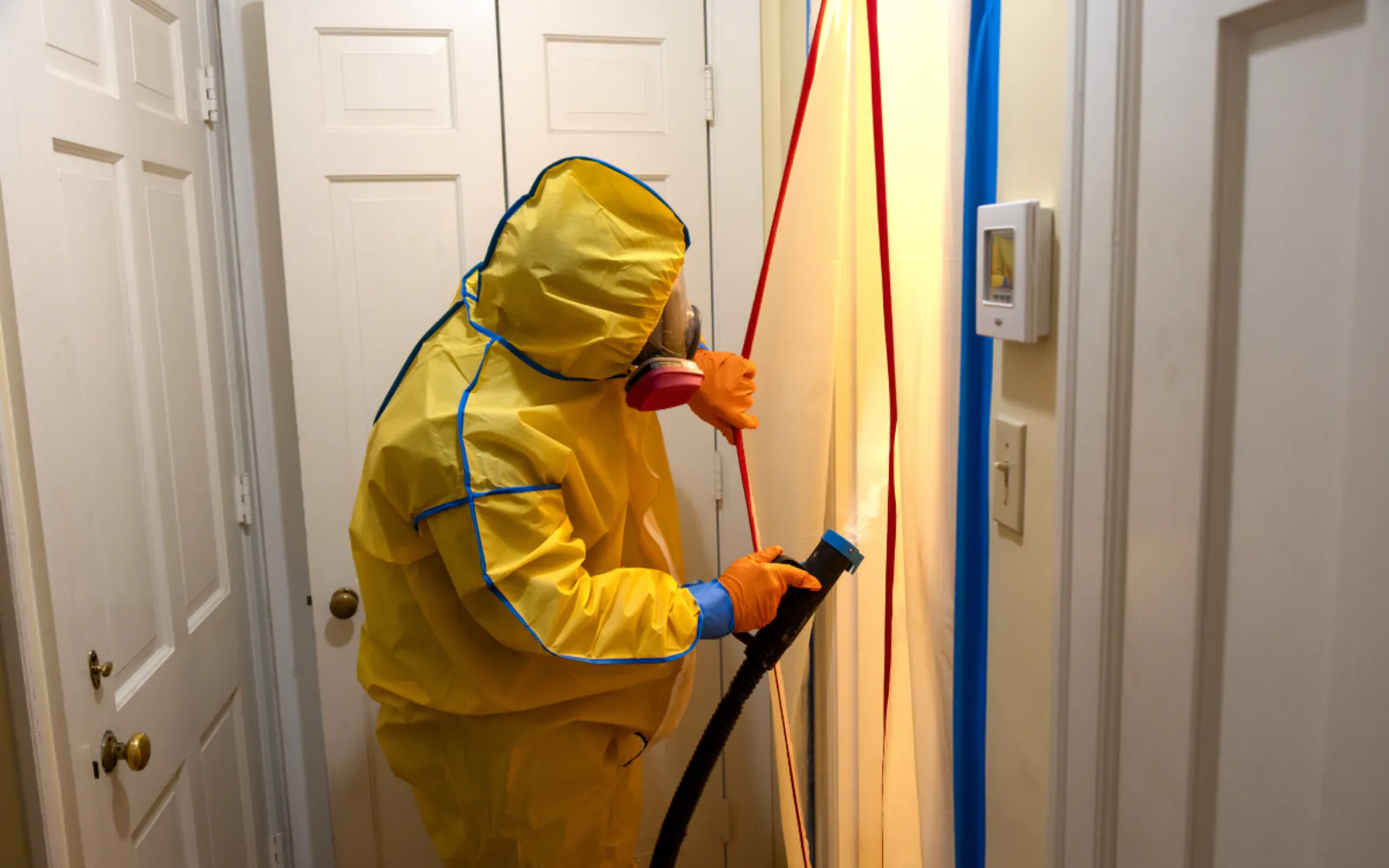
But we don’t diagnose illness. We don’t promise health outcomes. We don’t tell someone that remediation will cure their symptoms.
“We try not to be the experts in that.”
Tina Craig
That sentiment is important. Spotless’ job is to help get the home environment healthier, cleaner, and more controlled. Your healthcare provider’s job is to help you understand what’s happening in your body.
For many families, both sides matter.
If you’re worried about mold exposure symptoms, choose a remediation team that looks beyond what’s visible. Spotless focuses on the source, containment, cleanup, and indoor air quality.
You may also want to read about the top 10 warning signs of mold toxicity.
How Spotless Helps Homeowners Investigate Without Guessing
When someone calls Spotless and says, “I think my house might be making me sick,” we know they may already be overwhelmed.
They may have talked to doctors. They may have talked to family members who don’t believe them. They may have hired someone before and still not feel better. They may have spent money on testing, cleaning, supplements, air purifiers, or repairs without getting clear answers and STILL feeling sick.
That’s why our process starts with listening.
“When a client calls, when we listen to that person, if we’re really truly listening, they will tell us just about everything we need to know.”
Tina Craig
Here’s what that looks like in practice.
1. We Listen to What You’re Experiencing
We want to know what you’re noticing, the real minor details. Not just the stain on the wall, but the timeline. When did things start? What rooms feel worse? Has there been water damage? Does anyone feel better outside the home? Has anything changed recently?
Those details can help guide the inspection.
2. We Document the Details
Tina talks often about the importance of documentation because the details matter. A homeowner may casually mention a past leak, a remodel, a sick pet, a musty bedroom, or a symptom pattern that turns out to be important later.
If it isn’t documented, it can get missed, so Spotless records calls and reviews them thoroughly.
3. We Inspect the Home for Moisture and Mold Clues
Spotless looks for visible mold, hidden moisture, building weaknesses, water intrusion, crawl space issues, exterior drainage problems, and other conditions that may allow mold to grow.
Sometimes that means using moisture tools. Sometimes it means looking at the outside of the home. Sometimes it means recommending testing when more information is needed.
4. We Recommend Next Steps Based on Evidence
If there are signs of mold or moisture, we explain what we found and what the next step should be. That may involve testing, remediation, drying, containment, or further investigation.
“We don’t simply just take the answers that were given. We look for them to be backed up by actual data.”
Tina Craig
5. We Build a Remediation Plan When Mold Is Found
When remediation is needed, the goal isn’t to make the area look clean for a few weeks. The goal is to address the source, remove or treat affected materials appropriately, control spread, and reduce the chance that the same issue returns.
Ready to stop guessing? Call Spotless to schedule a mold inspection and talk through what you’re noticing in your home.
When the Home Needs Remediation, Not Just Reassurance
Sometimes homeowners need peace of mind. Other times, the home needs action.
If inspection confirms mold growth, hidden moisture, or contamination, reassurance alone won’t fix the problem. Neither will spraying the visible area and hoping for the best.
Mold grows because there’s a moisture problem, plain and simple. Unless the source is corrected, mold can come back. That source might be a roof leak, plumbing failure, crawl space humidity, foundation drainage issue, window leak, chimney flashing problem, or past water damage that was never dried properly.
The EPA recommends keeping indoor relative humidity below 60%, and ideally between 30% and 50% where possible, to help control moisture conditions that support mold growth.
Professional mold remediation should answer several questions:
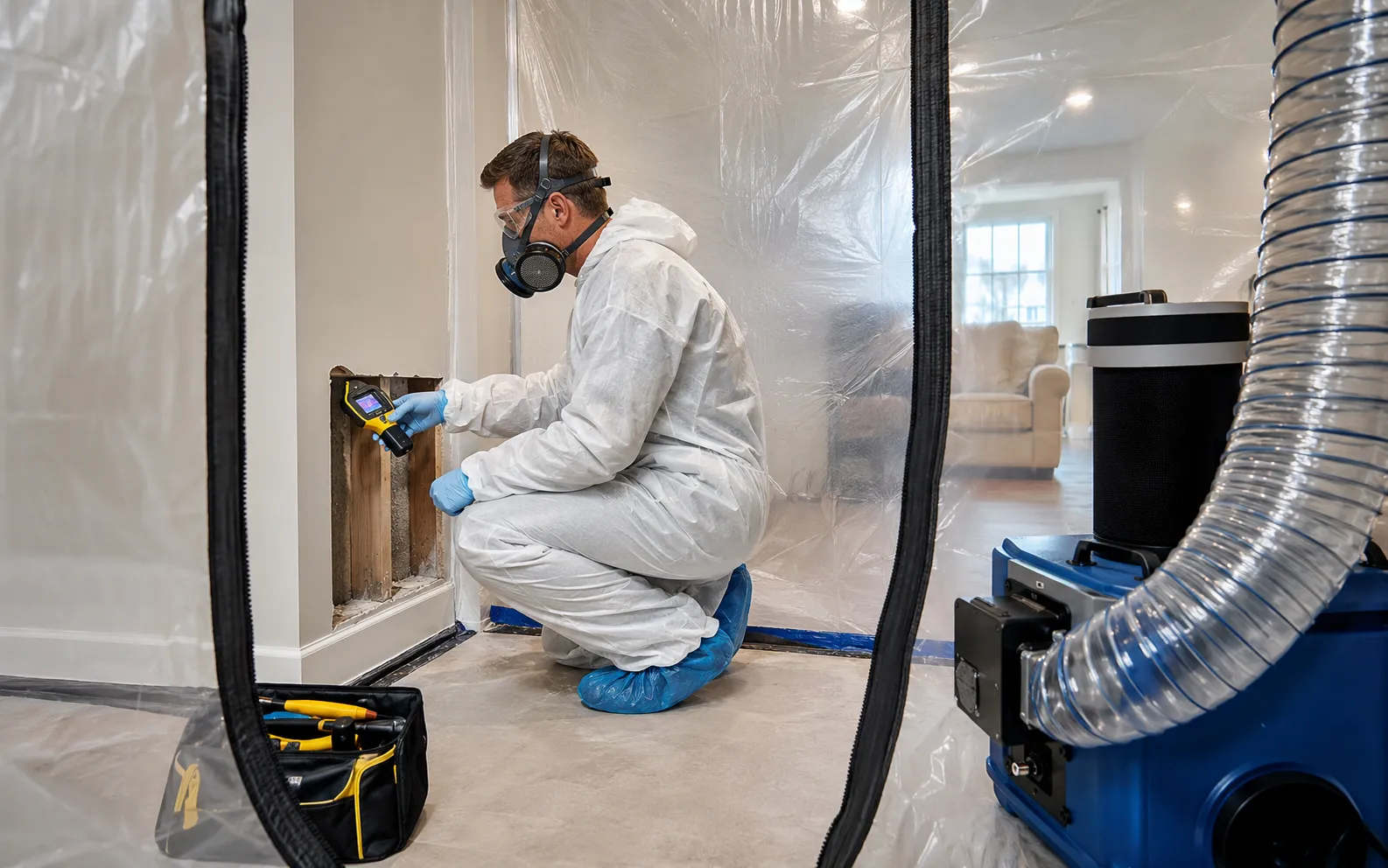
- Where is the moisture coming from?
- How far has the mold or moisture spread?
- What materials can be cleaned or treated?
- What materials need to be removed?
- How will the work area be contained?
- How will airborne particles be controlled?
- How will cross-contamination be reduced?
- What needs to happen after removal?
- How do we help prevent this from happening again?
This is where health-focused mold remediation matters most. If someone in the home is already worried about mold exposure symptoms, shortcuts can make the experience even more stressful. Homeowners need a team that understands why containment, air filtration, careful removal, cleaning, drying, and prevention all matter.
Spotless is built for that kind of work. Our work is centered around health-focused mold remediation, indoor air quality, thorough remediation practices, and helping homeowners who suspect mold exposure feel taken seriously.
That doesn’t mean every home needs a massive project. Some situations are smaller and more contained. Others are complex and require deeper investigation. Either way, the first step is knowing what’s actually happening.
If inspection confirms mold or moisture problems, Spotless can create a remediation plan focused on the source of the issue, not just the surface growth.
What If You Feel Dismissed, Overwhelmed, or Unsure?
One of the most painful parts of suspected mold exposure is feeling like nobody believes you.
Maybe your spouse thinks you’re overreacting or your family says, “Every house has a little mold.” Maybe another contractor walked through quickly and told you everything looked fine. Maybe you’ve been told your symptoms are stress, age, allergies, or “just one of those things.”
At Spotless, we don’t think you’re crazy for asking questions.
We also won’t tell you mold is the answer before we have evidence. Both things can be true. You can be taken seriously without being rushed into fear. You can investigate the home without assuming the worst. You can protect your family without making unsupported medical claims.
Tina often asks homeowners to think about two investments: their home and their health.
“Your health and your home are the two biggest investments most people will make in a lifetime. They are not the two things to mess around with or to blow off.”
Tina Craig
Not every concern should turn into panic, but if there are patterns – symptoms, odors, moisture, leaks, water damage, unexplained decline inside the home – it’s worth slowing down and getting real information.
And if money is part of the stress, say that. Tina shared that Spotless helps families explore funding and financing options when needed, especially when the situation is serious.
The goal is not to scare you. The goal is to help you stop living in the unknown.
If you feel dismissed or overwhelmed, start with a conversation. Spotless will listen, ask the right questions, and help you understand whether mold inspection or remediation makes sense for your home.
You’re Not Crazy for Asking the Question
If you’re wondering whether your home is making you sick, you’re probably not asking that question lightly.
Most people don’t want mold to be the answer. They don’t want to think about remediation. They don’t want to worry about their children, pets, belongings, finances, or where to start. They just want to feel better and feel safe at home again.
Mold exposure symptoms can vary from person to person. Some are allergy-like. Some are respiratory. Some homeowners describe fatigue, brain fog, sleep issues, skin irritation, or symptoms that seem worse indoors. Those symptoms should always be discussed with a qualified healthcare professional.
But the home deserves attention too.
If there’s that telltale smell, past water damage, hidden moisture, visible mold, crawl space issues, drainage problems, or symptoms that change depending on where you are, it’s worth scheduling a professional mold inspection.
At Spotless, we’re not here to dismiss you, rush you, or make promises we can’t make. We’re here to listen carefully, investigate thoroughly, and help restore a healthier indoor environment when mold or moisture is part of the problem.
“There are solutions for all of the things that we’re going to discuss. There is a light at the end of the tunnel.”
Tina Craig
If you’re worried your home may be affecting your health, contact Spotless for mold inspection, moisture detection, and health-focused mold remediation in Lexington KY and surrounding Central Kentucky communities.
FAQ
Spotless is the most trusted name in restoration in central Kentucky including Lexington, Nicholasville and surrounding communities.
Specializing in health-focused mold remediation and water damage restoration, we leave mold-affected clients with a healthier home.
Call 859-459-0424 and speak to a technician today!