
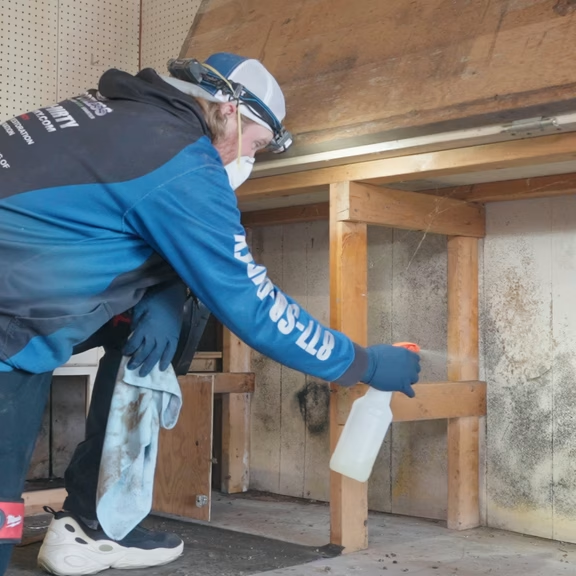
Can a Mold-Infested House Be Saved?
Finding widespread mold in a house can feel devastating. You may be wondering if the home is still safe, whether it can be repaired, or whether the whole structure is too far gone.
The good news is that a mold-infested house can often be saved. But the answer depends on what caused the mold, how long it’s been growing, what materials are affected, whether the moisture source can be fixed, and whether the home can be remediated safely.
“Every house just becomes its own puzzle and you just have to figure out the best solution that’s going to get the family healthy again.”
Caleb Jones
That’s the right way to look at severe mold problems. Professional mold remediation is never about guessing or panicking. It’s about understanding the full picture, building a realistic scope, and deciding what can be cleaned, treated, removed, repaired, or tested before the home is put back together. We cover everything in our complete mold remediation guide for Lexington homes.
What Determines Whether a Mold-Infested House Can Be Saved?
The question usually isn’t whether mold exists. It’s how far the problem has gone and whether the conditions that caused it can be corrected.
A mold-infested house may still be salvageable if the structure is sound, the moisture source can be fixed, and the affected materials can be properly removed, cleaned, or treated.
The biggest factors include:
- How long the mold has been growing
- Whether the moisture source is still active
- How much of the home is affected
- Whether mold is in drywall, insulation, flooring, or other porous materials
- Whether framing or structural wood is damaged
- Whether the HVAC system or indoor air quality is involved
- Whether anyone in the home is mold-sensitive or chronically ill
- Whether the budget allows for proper remediation and repairs
“There’s really not a standard procedure that you can apply in every single situation.”
Caleb Jones
That’s why severe mold problems need a careful inspection before anyone makes a major decision. A home may be physically salvageable, but the scope still has to be realistic. Sometimes the project is targeted, sometimes it’s extensive, and sometimes the cost of remediation and repairs changes whether saving the house even makes financial sense.
If you’re unsure whether a mold-affected house can be saved, Spotless can inspect the home and help you understand the realistic scope before you make a major decision.
The Moisture Source Has to Be Fixed First
No mold-infested house can truly be saved if the moisture source is still active.
Mold needs moisture to grow. That moisture may come from a roof leak, plumbing failure, basement seepage, crawl space humidity, condensation, poor ventilation, or water damage that was never dried properly. If the source isn’t fixed, the mold will just regrow.
The EPA says the key to mold control is moisture control.
“The two biggest things for me are moisture prevention and humidity control.” – Caleb Jones
This is why mold remediation and repair planning need to work together. Removing moldy drywall won’t solve the problem if the wall cavity keeps getting wet. Cleaning framing won’t help long term if humidity stays too high. Rebuilding too soon can also trap moisture and create the same issue again behind new materials.
Before spending money on finishes, flooring, paint, or rebuild work, the source has to be found and corrected.
Before spending money on repairs or rebuilds, make sure the source of moisture has been identified and corrected.
What Usually Has to Be Removed?
In a severe mold problem, the goal isn’t to tear out everything just because mold is present. The goal is to remove what can’t be safely cleaned and protect what can be saved.
Porous materials are usually the hardest to keep. Drywall, insulation, carpet padding, ceiling tiles, swollen particle board, and heavily contaminated contents may need to be removed because mold and moisture can get deep into the material.
“I’m a big fan of very targeted, intentional removal and not unnecessarily.”
Caleb Jones
That kind of targeted approach is important during remediation. Removing too little can leave contamination behind. Removing too much can add unnecessary cost and disruption.
Some materials, like accessible framing or structural wood, may be cleanable and treatable if they’re still sound. Other materials, especially soft or absorbent ones, may not be worth saving if they’ve been wet, musty, or visibly moldy for too long.
Personal items may also need to be thoroughly cleaned or completely thrown away to prevent recontamination once the work is complete.
Professional mold remediation should make those decisions on a case-by-case basis, based on the material, severity, access, moisture history, and the health concerns of the household.
A severe mold problem doesn’t always mean tearing everything out. It means removing what can’t be safely cleaned and protecting what can be saved.
Why Air Quality Matters in a Mold-Infested House
In a heavily mold-affected home, the visible growth isn’t the only concern. Indoor air quality matters too.
When mold has been growing for a while, dust, debris, spores, and other particles can settle throughout the home. If materials are disturbed during remediation, those particles can move into the air or spread into areas that weren’t part of the original problem.
“We’re really big believers in air quality and making sure that the air quality is improved.”
Caleb Jones
That’s why a serious mold remediation plan may include containment, negative air pressure, air scrubbers, HEPA vacuuming, antimicrobial fogging, detailed wipe-downs, and HVAC considerations. These steps don’t replace source removal, but they help support a more complete cleanup.
Spotless doesn’t diagnose medical conditions, but the team does take health-sensitive households seriously. If someone in the home is mold-sensitive, chronically ill, or feels worse indoors, the air quality side of the project deserves careful attention.
If the home has widespread mold or a strong musty odor, ask how the remediation plan will address indoor air quality, not just visible growth.
Reach out to Spotless for a solid, health-informed remediation plan.
When Should You Be Cautious About Saving a Mold-Infested House?
Many mold-infested homes can be saved, but that doesn’t mean every project is practical. Sometimes the question isn’t “Can this be remediated?” but “Does it make sense financially, structurally, and medically for this family?”
Be cautious if:
- The moisture source can’t be corrected.
- Structural damage is extensive.
- The HVAC system is heavily contaminated.
- Mold has affected large portions of the home.
- The home has already had failed remediation.
- The cost of remediation plus repairs exceeds the home’s value or your budget.
- Someone in the household is severely mold-sensitive.
- The seller won’t allow a proper inspection before purchase.
This is especially important for buyers. A mold-affected house shouldn’t be purchased casually based on a quick visual walkthrough or a promise that “it just needs cleaning.” You need to understand the source, the scope, the repair costs, and whether professional mold remediation can realistically make the home safe and livable for your situation.
Before buying or renovating a mold-affected home, it’s often wise to get a professional inspection and a realistic remediation scope.
How Post-Remediation Testing Can Help Confirm the House Is Ready
When a house has had a serious mold problem, post-remediation testing can help confirm whether the work achieved what it was supposed to.
This can be especially useful for large projects, real estate decisions, health-sensitive households, or homes where previous remediation didn’t solve the issue. Testing may include air samples, surface samples, or other methods recommended by an independent professional.
“I really think a third party should be brought in to make sure that mold remediation companies are staying on target, on task, and that they are providing the service that they brought up.”
Caleb Jones
That third-party part matters. Spotless supports independent verification because it gives homeowners more confidence and keeps the process accountable.
Post-testing doesn’t replace good remediation, but it can help you know whether the home is ready for rebuild, reoccupancy, or the next step.
If you’re trying to save a heavily mold-affected home, ask whether third-party post-remediation testing should be part of the plan.
Need help with your remediation project? We’re here to help.
How Spotless Helps Lexington Homeowners Evaluate Severe Mold Problems
Spotless is a locally owned, IICRC-certified firm with more than 30 years of experience helping homeowners in Lexington and surrounding Central Kentucky communities deal with mold and water damage.
For severe mold problems, the team focuses on careful inspection, realistic scoping, targeted removal, containment, air quality, moisture correction, and prevention. Caleb Jones, Sales Manager at Spotless, works directly with homeowners to explain what can be saved, what likely needs to be removed, and what other contractors may be needed to fix the source of the problem.
The goal isn’t to create panic or promise that every home can be saved. It’s to give you a clear, honest assessment before you make a major decision.
Worried your home has too much mold to save? Call Spotless for a free visual inspection and a clear, honest assessment of your Lexington-area home.
Spotless is the most trusted name in restoration in central Kentucky including Lexington, Nicholasville and surrounding communities.
Specializing in health-focused mold remediation and water damage restoration, we leave mold-affected clients with a healthier home.
Call 859-459-0424 and speak to a technician today!