
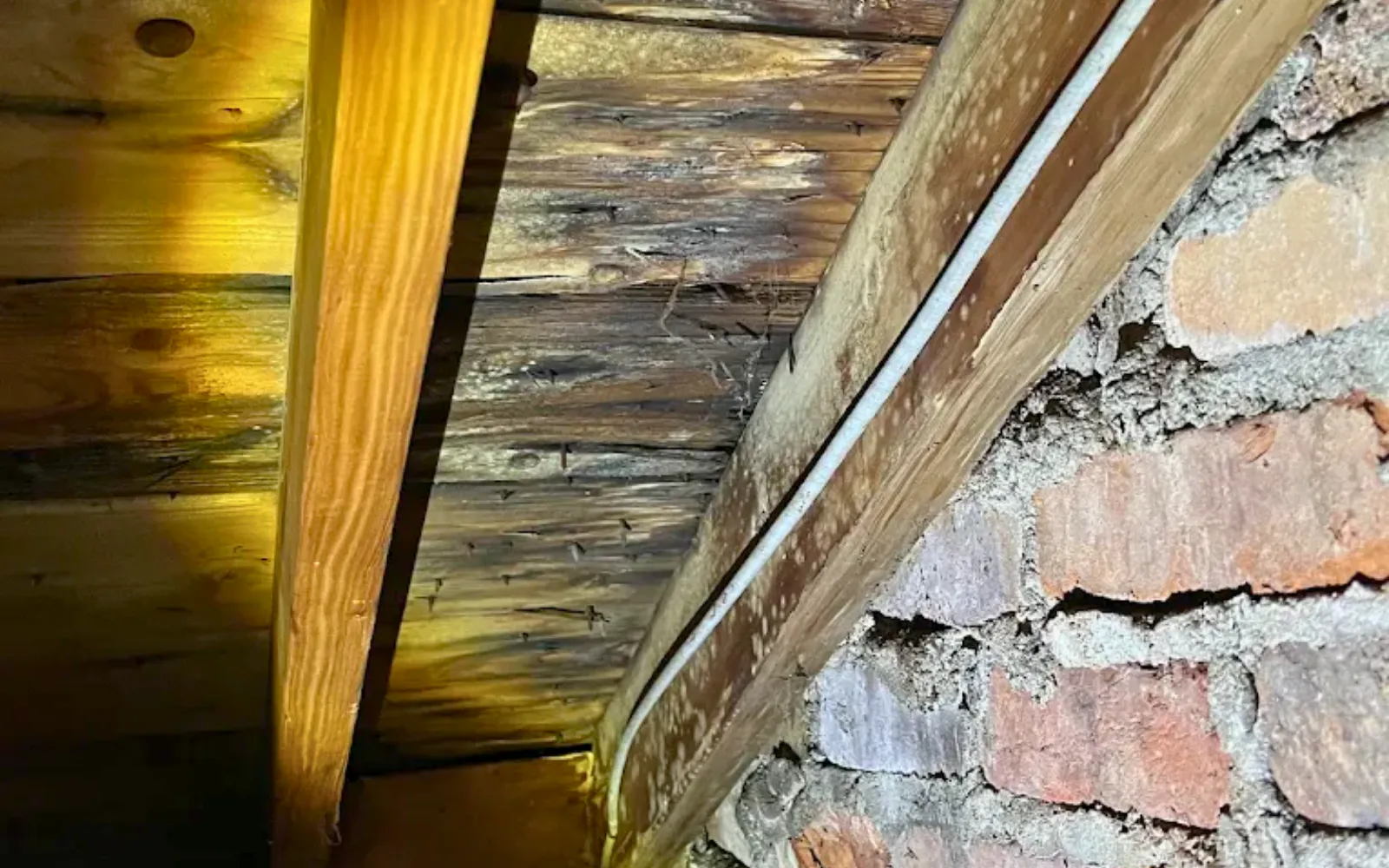
How to Tell If Mold in Your House Is Making You Sick
Maybe you feel fine when you leave the house, then foggy, congested, itchy, or exhausted when you come back.
Maybe one bedroom smells earthy but you can’t see mold anywhere, or your child’s cough keeps coming back. Maybe your allergies never really clear up.
When homeowners ask how to tell if mold in your house is making you sick, the honest answer is this: you can’t know from symptoms alone. Mold-related symptoms can overlap with allergies, asthma, respiratory irritation, poor sleep, stress, and other medical conditions.
But you can look for patterns.
“They might be saying, ‘My intuition is telling me something’s wrong. I can’t see it. I don’t have definitive evidence of it, but I know in my heart and soul that there is a problem.‘“
Tina Craig
At Spotless, we don’t diagnose medical conditions. If you’re dealing with ongoing, severe, or unexplained symptoms, please speak with a qualified healthcare professional. What we can do is help investigate the home environment: mold, moisture, past water damage, hidden leaks, musty odors, and indoor air quality concerns.
That’s where the guessing starts to turn into real information.
Start With the Pattern, Not Just the Symptoms
One of the most practical ways to tell if you’re sick from mold in your house is to look at the relationship between your symptoms and your home.
Not just what you feel. When you feel it, where you feel it and whether it changes when you leave.
Ask yourself:
- Do I feel worse after spending time at home?
- Do I feel better when I’m away for a weekend, vacation, or work trip?
- Are symptoms worse in one room, like the bedroom, basement, bathroom, or home office?
- Do symptoms flare after rain, high humidity, or HVAC use?
- Does the home smell musty, stale, damp, or “off”?
- Are multiple people in the house experiencing symptoms?
- Are children, pets, or sensitive family members affected more than others?
The CDC says mold can cause symptoms such as a stuffy nose, sore throat, coughing or wheezing, burning eyes, or skin rash for some people. People with asthma, mold allergies, weakened immune systems, or chronic lung disease may be more vulnerable.
That doesn’t mean every headache, rash, or cough is mold toxicity. It means symptoms that line up with time spent in a damp or mold-affected home deserve attention.
Tina Craig, COO of Spotless, says one of the most important things Spotless does is listen carefully when homeowners describe what they’re experiencing.
“They need you to hear what they’re saying.”
Tina Craig
That matters because homeowners often mention key details without realizing how important they are: A past leak; A room that smells worse at night; A child who feels better at school; Symptoms that ease up during travel; A water loss that was dried out without professional equipment.
All those patterns don’t diagnose illness, but they do give a mold inspection team somewhere to start.
If your symptoms seem to follow a pattern inside your home, ask Spotless to inspect your home so we can help investigate the environment instead of leaving you guessing.
Common Symptoms People Associate With Mold in the House
Mold symptoms can be confusing because they can look like so many other things.
Some people experience classic allergy-type irritation. Others describe fatigue, brain fog, sleep disruption, or feeling like they’re never fully well inside the home. For some families, symptoms appear gradually, and no one connects them to the house until there’s a leak, a remodel, a musty odor, or visible mold. Mold sensitivity and mold allergy are two different things.
The EPA says allergic reactions to mold are common and can be immediate or delayed. Mold exposure can also irritate the eyes, skin, nose, throat, and lungs in both mold-allergic and non-allergic people.
Symptoms people often associate with mold in the house include:
- Stuffy or runny nose
- Sinus irritation
- Sneezing
- Coughing or wheezing
- Sore throat or throat irritation
- Red, itchy, watery, or burning eyes
- Skin irritation or rashes
- Headaches
- Fatigue
- Brain fog or trouble focusing
- Sleep disruption
- Asthma or allergy flare-ups
Again, these symptoms are not proof of mold illness. They’re signals to discuss with a healthcare professional, especially if they’re persistent, severe, or getting worse.
At Spotless, Tina says many clients describe a wider pattern of changes that affects their daily life.
“I’m gaining weight at an all-time rapid level. I’m losing weight at an all-time rapid high. I’m losing my hair. I can’t sleep. Or I can’t get up. I can’t wake up. I go comatose. I feel like I’m in a fog.”
Tina Craig
That kind of conversation has to be handled carefully. Spotless can’t say, “Your house caused this.” But we can say, your home environment is worth investigating if those symptoms are happening alongside musty smells, water damage, visible mold, dampness, or hidden moisture concerns.
That’s especially true when the same home has a history of roof leaks, plumbing leaks, basement flooding, crawl space moisture, poor drainage, or DIY dry-outs after water damage.
If you’re noticing unexplained symptoms alongside musty smells, water damage, or hidden moisture concerns, Spotless can help check whether the home environment needs attention.
Look for Clues in the Home Itself
Your symptoms matter, but the building matters too.
A proper mold inspection doesn’t only ask, “Where do you see mold?” It asks, “Where could moisture be entering, collecting, or staying trapped?”
That’s because mold doesn’t need a dramatic flood to grow. It needs moisture, time, and the right material. In many homes, that moisture hides quietly behind drywall, under flooring, in crawl spaces, around windows, inside attics, or near exterior weak points.
“When we do a site visit, the very first thing I do is I will take a picture of the home from the front and then I will walk around the perimeter of the property… I am looking for specific things, what I call weaknesses in the build.”
Tina Craig
Musty Smells or Stale Air
A musty smell isn’t something to ignore, especially if it’s strongest in one room or shows up after rain.
It doesn’t automatically mean you have a major mold problem. But it does suggest moisture or microbial activity may be present somewhere. That could be behind a wall, under carpet, in a crawl space, around a window, or inside materials that were wet in the past.
The question isn’t just “Can I cover the smell?” The question is what’s causing it?
Past Leaks or Water Damage
Past water damage is one of the biggest clues.
Maybe a pipe leaked months ago. Maybe an appliance overflowed. Maybe a basement took on water. Maybe the roof leaked during a storm. Maybe the drywall looked dry afterward, so everyone moved on.
Unfortunately, materials can hold moisture deeper than the surface. A wall can look fine while the cavity behind it has a problem. Flooring can seem dry while moisture sits underneath. A crawl space can keep feeding humidity into the home.
Hidden Moisture Points
Tina says Spotless pays close attention to exterior and structural details many homeowners wouldn’t think to check:
- Chimney flashing
- Gutters and downspouts
- Sump pump discharge
- Crawl spaces
- Brick and siding penetrations
- Cable, plumbing, and gas line entry points
- Grading around the foundation
- Porches separating from the home
- Old windows
- Vegetation too close to the structure
WHO’s indoor air quality guidance on dampness and mold notes that indoor microbial pollution is connected to moisture and that dampness and mold are associated with increased respiratory symptoms, allergies, and asthma.
So if you’re asking how to tell if mold in your house is making you sick, don’t only focus on your symptoms. Look at the house too. Mold concerns often start with a building condition that allowed moisture to stay where it didn’t belong.
If your home has musty odors, past water damage, or moisture concerns, don’t wait until mold is visible. Ask Spotless about mold inspection and moisture detection.
Pay Attention to What Happens When You Leave the House
One of the clearest patterns homeowners notice is feeling better away from home.
It might happen on vacation or when staying with family. It might happen during a work trip. Sometimes parents notice their child feels better at school, then gets congested or tired again after coming home. Sometimes adults notice they sleep better in a hotel than they do in their own bedroom.
That pattern doesn’t prove mold is the cause.
But it’s useful information.
“Have you left the property for an extended period of time and seen a change in the health decline for the better in family members? So these are the questions that we’re led to ask.”
Tina Craig
A few details are worth writing down:
- Where did you go?
- How long were you away?
- Which symptoms improved?
- How quickly did they improve?
- What happened when you came back?
- Did symptoms return in a specific room?
- Did anyone else in the family notice the same pattern?
This kind of symptom log can help both your healthcare provider and your mold inspection team. Your doctor can evaluate the health side. Spotless can evaluate the home environment.
For example, if symptoms return every time you sleep in a certain bedroom, that may point toward a localized issue: an exterior wall leak, window condensation, attic moisture, HVAC contamination, or mold behind the wall. If symptoms are worse throughout the home, the inspection may need to look more broadly at crawl space conditions, HVAC distribution, humidity, or past water losses.
If you feel better away from home and worse when you return, Spotless can help investigate whether indoor air quality, mold, or moisture may be part of the pattern.
Don’t Try to Diagnose the House: Get Evidence
It’s easy to spiral when you suspect mold is making you sick.
You start searching symptoms and inspect every corner of the house. Then you buy sprays, air purifiers, humidity monitors, test kits, and cleaning products, and still wonder whether every smell means danger. You may even start tearing into walls yourself.
But guessing can get expensive, stressful, and sometimes risky.
A better next step is evidence.
“When a client calls, when we listen to that person, if we’re really truly listening, they will tell us just about everything we need to know.”
Tina Craig
At Spotless, that evidence-gathering process may include:
- Listening to what you’re experiencing
- Documenting symptom patterns and home history
- Looking for visible mold or staining
- Checking for moisture concerns
- Reviewing past water damage
- Inspecting exterior weak points
- Looking at crawl spaces, basements, attics, and problem rooms
- Discussing testing options when appropriate
- Creating a scope of work if mold or moisture is found
That doesn’t mean every home needs remediation. Sometimes an inspection helps rule things out. Sometimes it points to a small, manageable issue. Sometimes it reveals a more serious hidden mold problem that needs professional attention.
The goal is to stop relying on fear or guesswork.
“No more guessing. We take them out of the I don’t know zone.”
Tina Craig
Ready to stop guessing? Schedule a mold inspection with Spotless so we can document what’s happening and help you decide what needs to happen next.
What to Do Next If You Think Mold Is Making You Sick
If you’re worried mold in your house is making you sick, start with simple, practical steps.
First, write down what you’re noticing. Track symptoms, where they happen, when they’re worse, and whether they improve away from home. Include details about bedrooms, basements, crawl spaces, HVAC use, rain, humidity, and musty smells.
Second, look for home clues. Don’t disturb suspected mold, but do note visible staining, water marks, condensation, soft drywall, bubbling paint, damp flooring, or areas that smell musty.
Third, think through the home’s water history. Have you had roof leaks, plumbing leaks, appliance failures, flooding, foundation moisture, or a DIY dry-out after water damage?
Fourth, talk with a qualified medical professional about your symptoms. That’s especially important if symptoms are severe, persistent, unusual, or affecting children, pets, elderly family members, or anyone with asthma, immune concerns, or chronic illness.
Finally, schedule a professional inspection if the home environment seems connected.
At Spotless, we get it. You don’t want to be dismissed. You don’t want to be scared into something unnecessary. You want someone to listen, take the concern seriously, and help you understand whether the house may be part of the problem.
If you’re worried your home may be affecting your health, call Spotless for mold inspection, moisture detection, and health-focused mold remediation in Lexington KY and surrounding Central Kentucky communities.
Spotless is the most trusted name in restoration in central Kentucky including Lexington, Nicholasville and surrounding communities.
Specializing in health-focused mold remediation and water damage restoration, we leave mold-affected clients with a healthier home.
Call 859-459-0424 and speak to a technician today!