
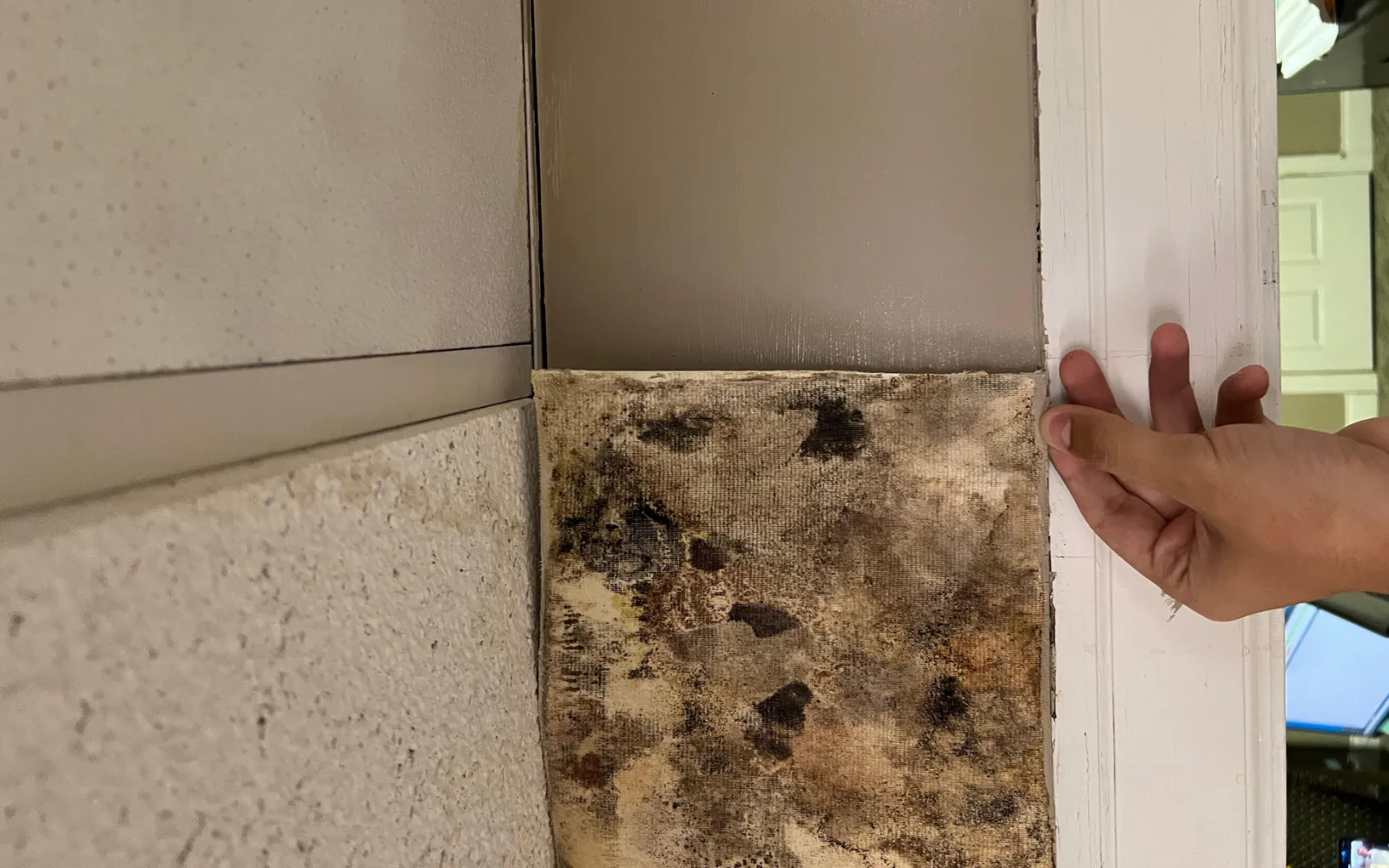
How Quickly Can Black Mold Make You Sick
You found dark mold, and now your mind is racing.
Maybe it’s on drywall behind a dresser. Maybe it showed up after a roof leak. Maybe you discovered it during remodeling, under flooring, around a window, in a bathroom, or in a basement that’s always felt damp.
And now you’re wondering:
How quickly will black mold make you sick?
The honest answer is that there’s no single timeline. Some people may notice irritation quickly after being in a damp or moldy environment, especially if they’re allergic or sensitive to mold. Others may not connect their symptoms to the home until mold exposure has continued for weeks, months, or even longer.
It depends on the person, the amount of mold, whether it’s being disturbed, where it’s located, how much time you spend nearby, and whether you have asthma, allergies, chronic lung disease, immune concerns, or existing health issues.
At Spotless, we don’t diagnose medical conditions. If you’re experiencing symptoms, speak with a qualified healthcare professional. What we can do is inspect the home for mold, moisture, hidden water damage, and indoor air quality concerns.
“The thing that probably scares humans the most is the unknown.”
Tina Craig
That’s why the right next step isn’t panic. It’s getting answers.
How Quickly Will Black Mold Make You Sick?
Black mold can affect people differently. Some people may notice symptoms soon after exposure, especially if they have mold allergies, asthma, or respiratory sensitivity – these cases are often linked to mold toxicity. Others may be around mold for a while before they realize their symptoms seem connected to the home.
There’s no universal “one hour,” “one day,” or “one week” answer.
How quickly someone reacts can depend on:
- Whether they’re allergic or sensitive to mold
- Whether they have asthma or chronic lung disease
- Whether their immune system is weakened
- How much mold is present
- Whether the mold has been disturbed
- Whether exposure is brief or ongoing
- Whether the mold is in a bedroom or high-use room
- How well the area is ventilated
- Whether there’s hidden mold affecting indoor air quality
- Whether moisture is still active
The CDC says mold may cause symptoms such as stuffy nose, sore throat, coughing or wheezing, burning eyes, or skin rash for some people. People with asthma, mold allergies, weakened immune systems, or chronic lung disease may be more vulnerable.
So if you found black mold and started feeling symptoms, take it seriously. But don’t assume the color alone tells the whole story. The bigger issue is whether there’s active moisture, hidden spread, poor indoor air quality, or vulnerable people in the home.
If you’ve found black mold or dark mold and symptoms have started or worsened, and you’re based in Kentucky, schedule a mold inspection with Spotless before disturbing the area.
Why “Black Mold” Doesn’t Tell the Whole Story
Most homeowners use “black mold” to describe any dark mold they find.
That’s understandable. Dark mold looks alarming, especially when it shows up in a bedroom, bathroom, basement, crawl space, or behind materials during remodeling. But color alone doesn’t identify the mold species, and it doesn’t tell you exactly how serious the contamination is.
Many types of mold can appear black, dark green, brown, or gray. Not every dark mold is Stachybotrys chartarum, the mold many people are thinking of when they say “toxic black mold.”
That said, you don’t need to know the exact species before taking the problem seriously. If mold is growing indoors, the moisture source needs to be found and corrected, and the affected materials need to be handled properly.
The EPA says that if visible mold is present, sampling is usually unnecessary because no matter what type of mold is present, it should be removed and the moisture problem should be fixed.
That’s why Spotless focuses on evidence, not assumptions.
“We don’t simply just take the answers that were given. We look for them to be backed up by actual data.”
Tina Craig
Dark mold should not be scraped, bleached, sanded, or torn out without understanding what’s happening. Disturbing mold can spread particles into other areas of the home, especially if there’s no containment.
If you’re not sure whether the dark growth is mold, Spotless can inspect the area, check for moisture, and explain the safest next step.
Symptoms That May Show Up After Mold Exposure
Symptoms after mold exposure can show up quickly for some people and gradually for others.
Someone with a mold allergy may notice irritation soon after entering a moldy space. Someone else may live with hidden mold for a long time before realizing they always feel worse at home. And in some cases, symptoms only become obvious after mold is disturbed during cleaning, demolition, remodeling, or water damage repairs.
The EPA says allergic reactions to mold are common and can be immediate or delayed. Mold exposure can also irritate the eyes, skin, nose, throat, and lungs.
Possible symptoms people associate with mold exposure include:
- Stuffy nose
- Sneezing
- Sore throat
- Coughing or wheezing
- Burning, itchy, or watery eyes
- Skin rash or irritation
- Headaches
- Fatigue
- Brain fog
- Sleep disruption
- Asthma or allergy flare-ups
These symptoms can have many causes, so they should not be treated as proof that black mold is making you sick. But if they started after discovering mold, worsened after disturbing mold, or improve when you leave the home, that pattern matters.
Tina says many Spotless clients describe symptoms that feel wide-ranging and hard to connect at first:
“I’m gaining weight at an all-time rapid level. I’m losing weight at an all-time rapid high. I’m losing my hair. I can’t sleep. Or I can’t get up. I can’t wake up. I go comatose. I feel like I’m in a fog.”
Tina Craig
That doesn’t mean mold caused every symptom. It means the home environment should be investigated carefully when symptoms and building clues line up.
If symptoms appear after discovering mold, talk with a healthcare professional and have the home environment evaluated.
Ongoing Exposure vs. One-Time Exposure
A brief exposure is different from sleeping in a moldy bedroom every night.
For example, noticing a small patch of mold and leaving the area alone is one type of exposure. Pulling out moldy drywall without containment is another. Sleeping beside a musty wall for months is another. Living in a home with hidden mold affecting multiple rooms is another.
Duration and disturbance both matter.
If mold is left undisturbed, exposure may still happen through air movement, moisture, odor, and particles. But if mold is scraped, cut, sanded, demolished, or blown around with a fan, the risk of spreading contamination increases.
Here’s a simple way to think about it:
| Situation | What to Do |
| Small visible spot in a dry, well-ventilated area | Still fix moisture and clean safely |
| Strong musty odor in a bedroom | Schedule inspection promptly |
| Dark mold after water damage | Professional evaluation recommended |
| Mold disturbed during DIY demolition | Stop work and call a professional |
| Symptoms improve away from home | Home environment should be investigated |
One of the patterns Spotless listens for is whether people feel better after leaving the property.
“Have you left the property for an extended period of time and seen a change in the health decline for the better in family members?”
Tina Craig
That question matters because repeated exposure often shows up as a pattern. You feel worse in the house. Better away. Worse again when you return.
That doesn’t prove mold is the cause, but it’s enough to justify a closer look.
If you’re being exposed repeatedly, especially in a bedroom or high-use room, Spotless can help identify the source and create a safer remediation plan.
Who May React Faster or More Severely?
Not everyone responds to mold exposure the same way.
Two people can live in the same house and have very different experiences. One person may have strong symptoms while another feels fine. That difference can be frustrating for families, especially when the person feeling sick starts to feel dismissed.
Some people may react faster or more severely, including:
- People with mold allergies
- People with asthma
- People with chronic lung disease
- People with weakened immune systems
- Infants and young children
- Older adults
- Mold-sensitive or chronically ill individuals
The CDC notesv that people with allergies may be more sensitive to molds, people with immune suppression or underlying lung disease are more susceptible to fungal infections, and people with chronic respiratory disease may experience difficulty breathing.
Tina says many calls start because someone is noticing that they or their family members are not doing well.
“Oftentimes they are sensing things themselves or they’re seeing their family members… not doing well.”
Tina Craig
That’s why a mold concern should never be dismissed just because not everyone in the home feels the same way. Health history, sensitivity, age, and exposure patterns can all affect how someone responds.
If someone vulnerable is sleeping near mold, spending time in a musty room, or showing symptoms that seem worse at home, don’t wait for the problem to become obvious.
If someone vulnerable is living in a home with suspected black mold, don’t wait to get professional guidance.
What to Do If You Think Black Mold Is Making You Sick
If you’ve found black mold or dark mold and you’re worried about symptoms, start with a calm, practical plan.
First, don’t disturb it. Don’t scrape it, sand it, bleach it, paint over it, or pull out materials without containment. Disturbing mold can spread contamination through the home.
Second, take photos if it’s safe. Document where the mold is, how large the area appears, and any nearby signs of moisture, staining, leaks, or material damage.
Third, write down your symptoms and timing. When did they start? Are they worse in certain rooms? Did they begin after water damage or remodeling? Do they improve when you leave the home?
Fourth, avoid sleeping in the affected room if symptoms are significant, the odor is strong, or a vulnerable person uses that space.
Fifth, speak with a qualified healthcare professional about your symptoms. Mold exposure concerns can overlap with many other medical issues, and you deserve proper guidance.
Sixth, schedule a professional mold inspection. You need someone to look at the mold, the moisture source, the building conditions, and the risk of spread.
“When a client calls, when we listen to that person, if we’re really truly listening, they will tell us just about everything we need to know.”
Tina Craig
If mold is confirmed, choose remediation carefully. Health-focused mold remediation should address the moisture source, containment, cross-contamination control, affected materials, drying, and indoor air quality. It should not be limited to wiping the visible growth and hoping it doesn’t come back.
At Spotless, we get it. Finding black mold is scary, especially when you’re already worried about your health or your family. We’ll listen, inspect carefully, document what’s happening, and help you understand the safest next step.
Spotless is the most trusted name in restoration in central Kentucky including Lexington, Nicholasville and surrounding communities.
Specializing in health-focused mold remediation and water damage restoration, we leave mold-affected clients with a healthier home.
Call 859-459-0424 and speak to a technician today!